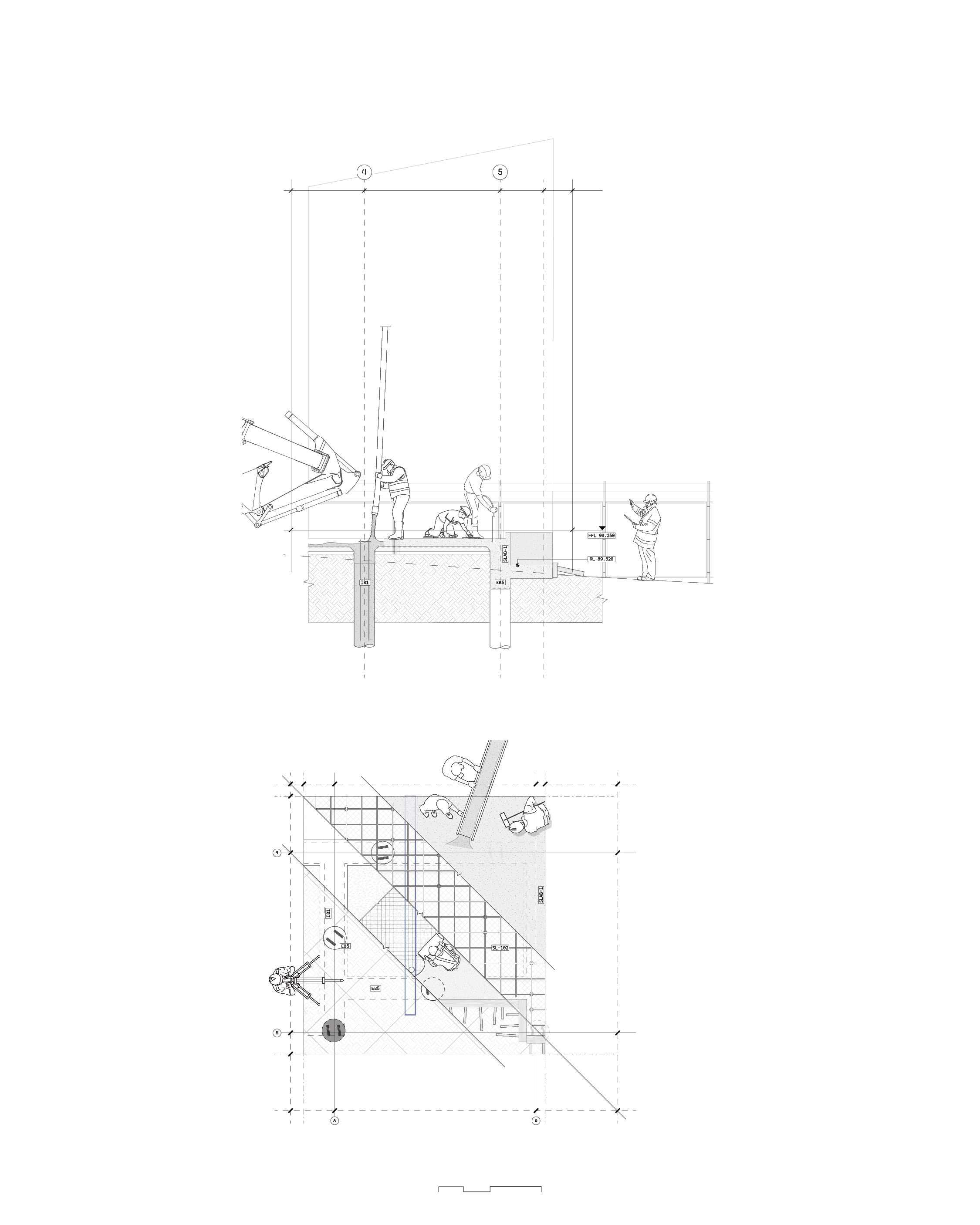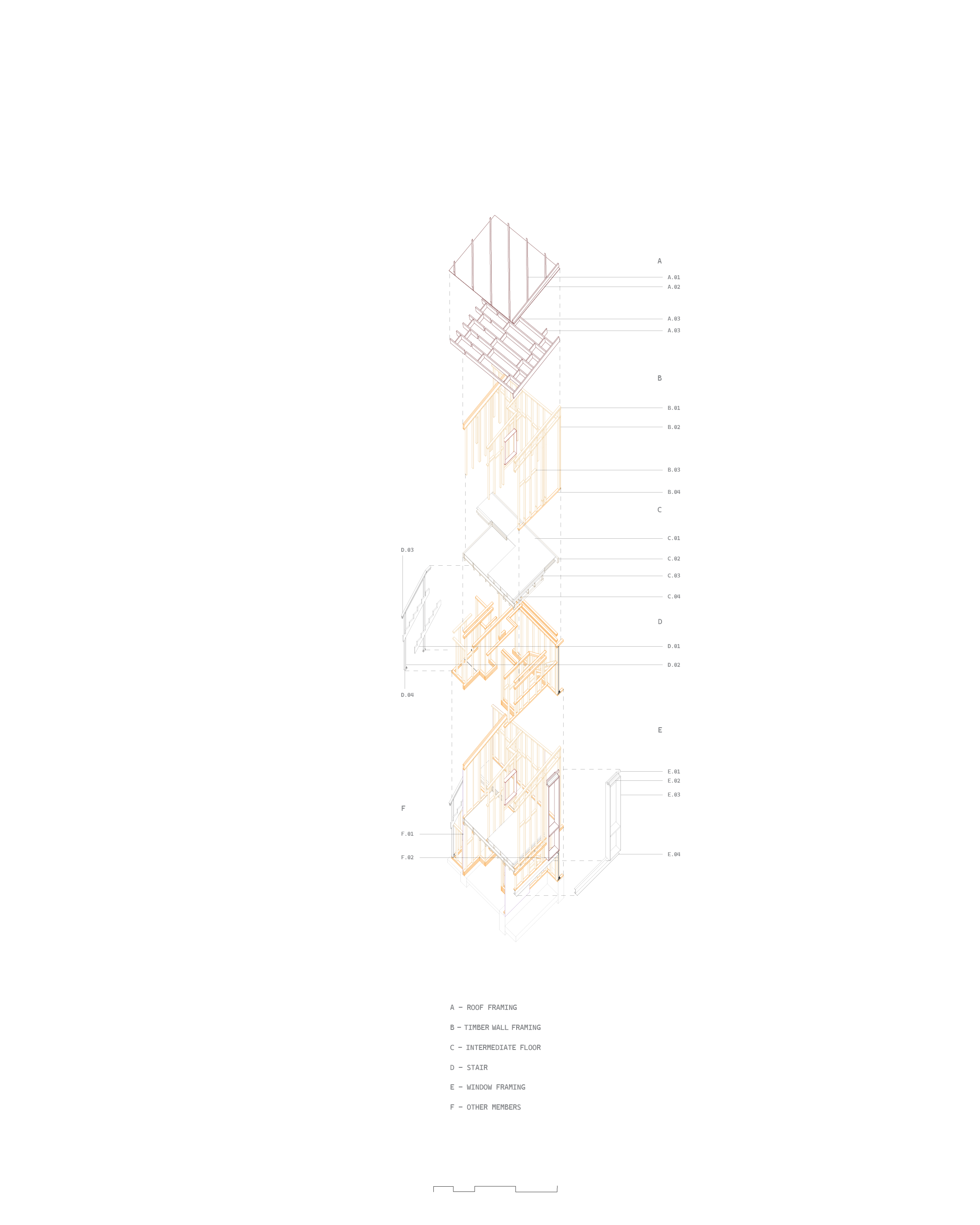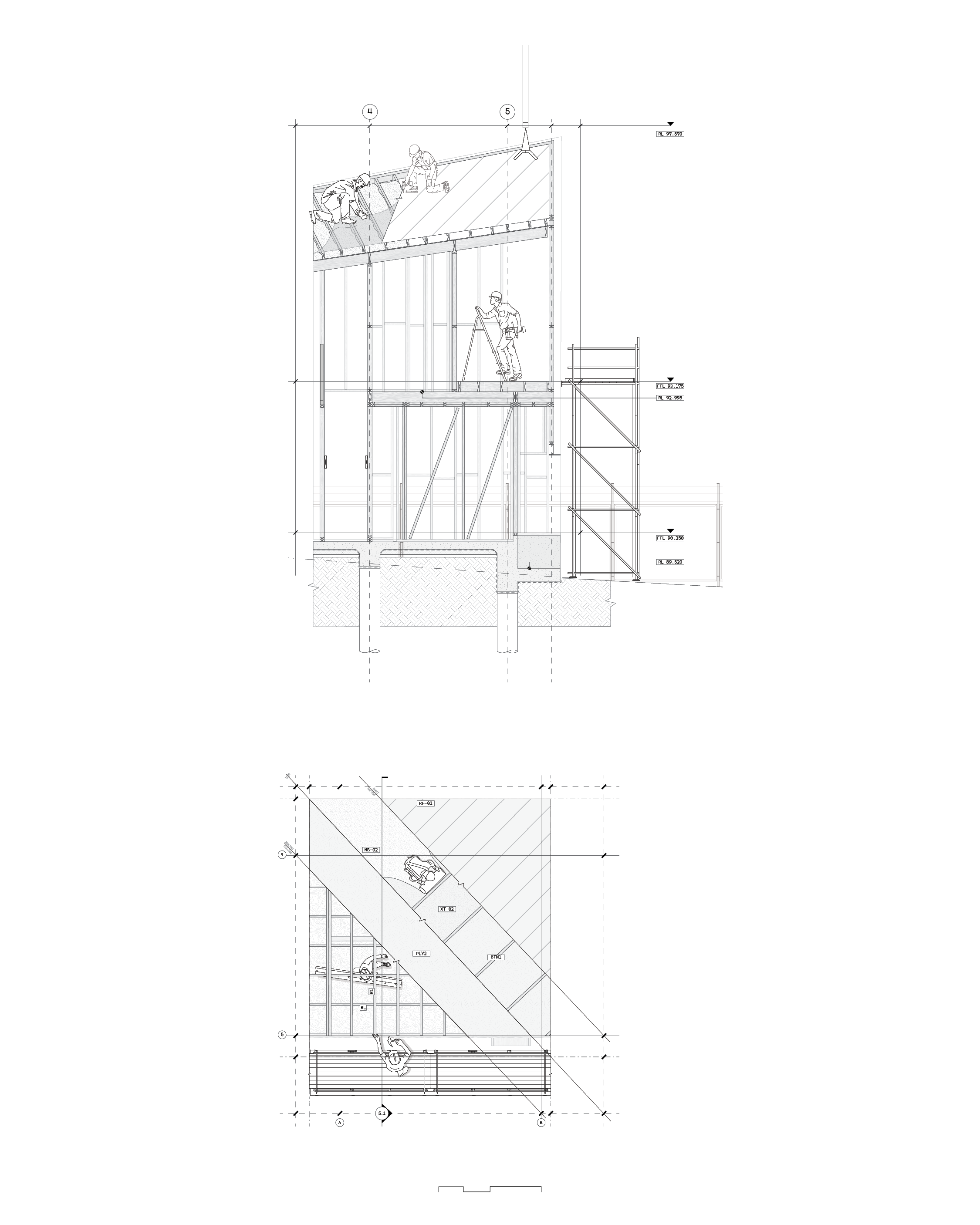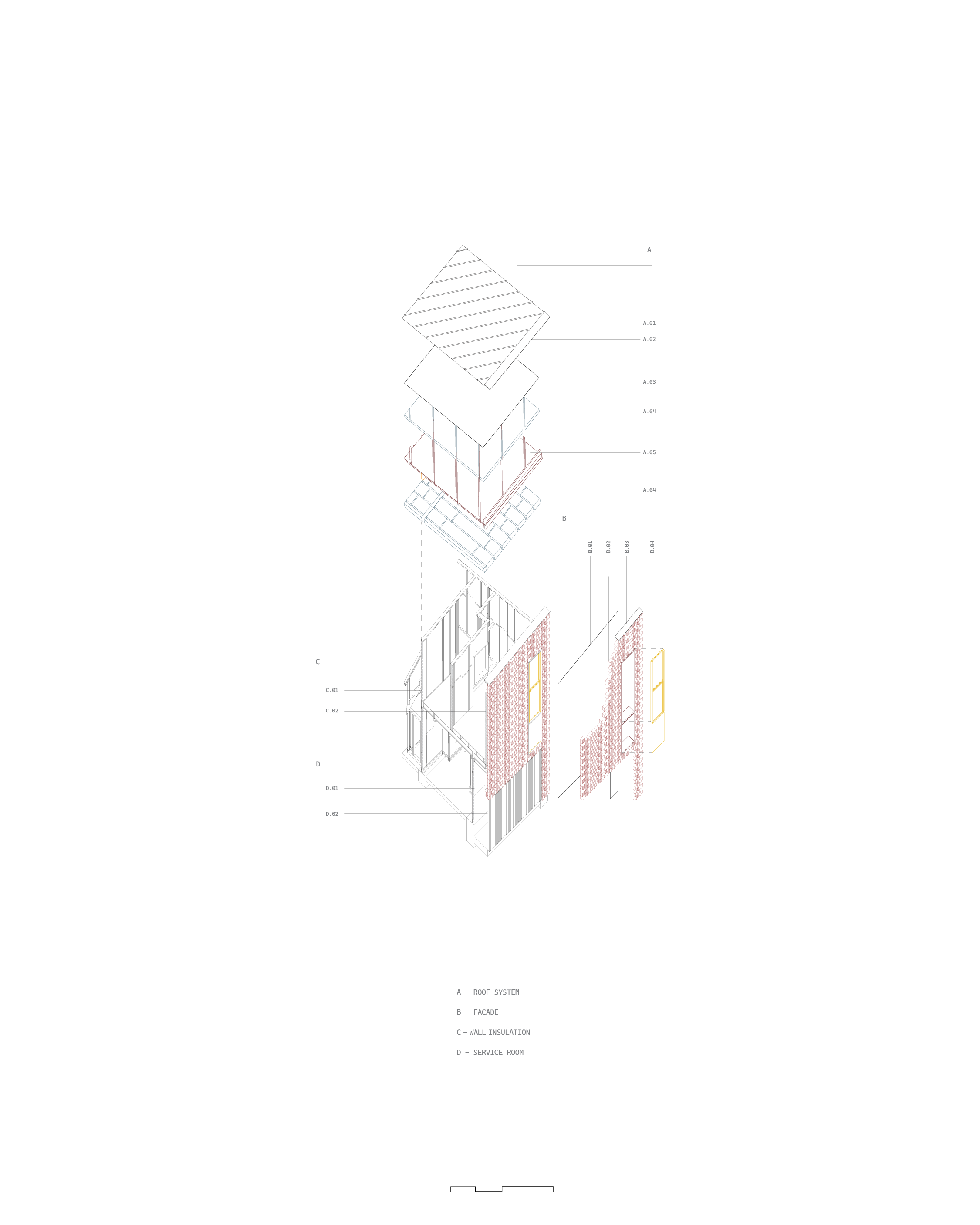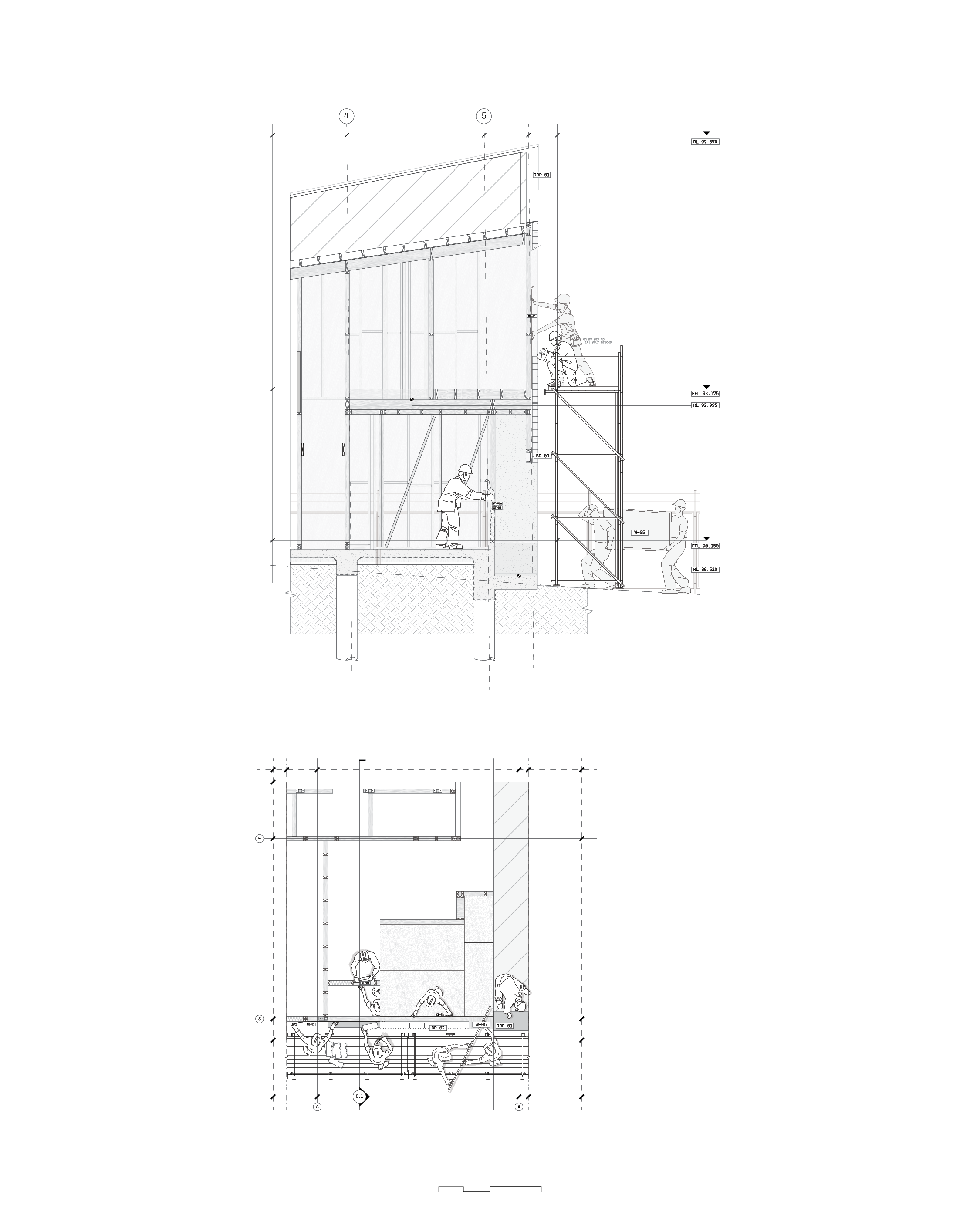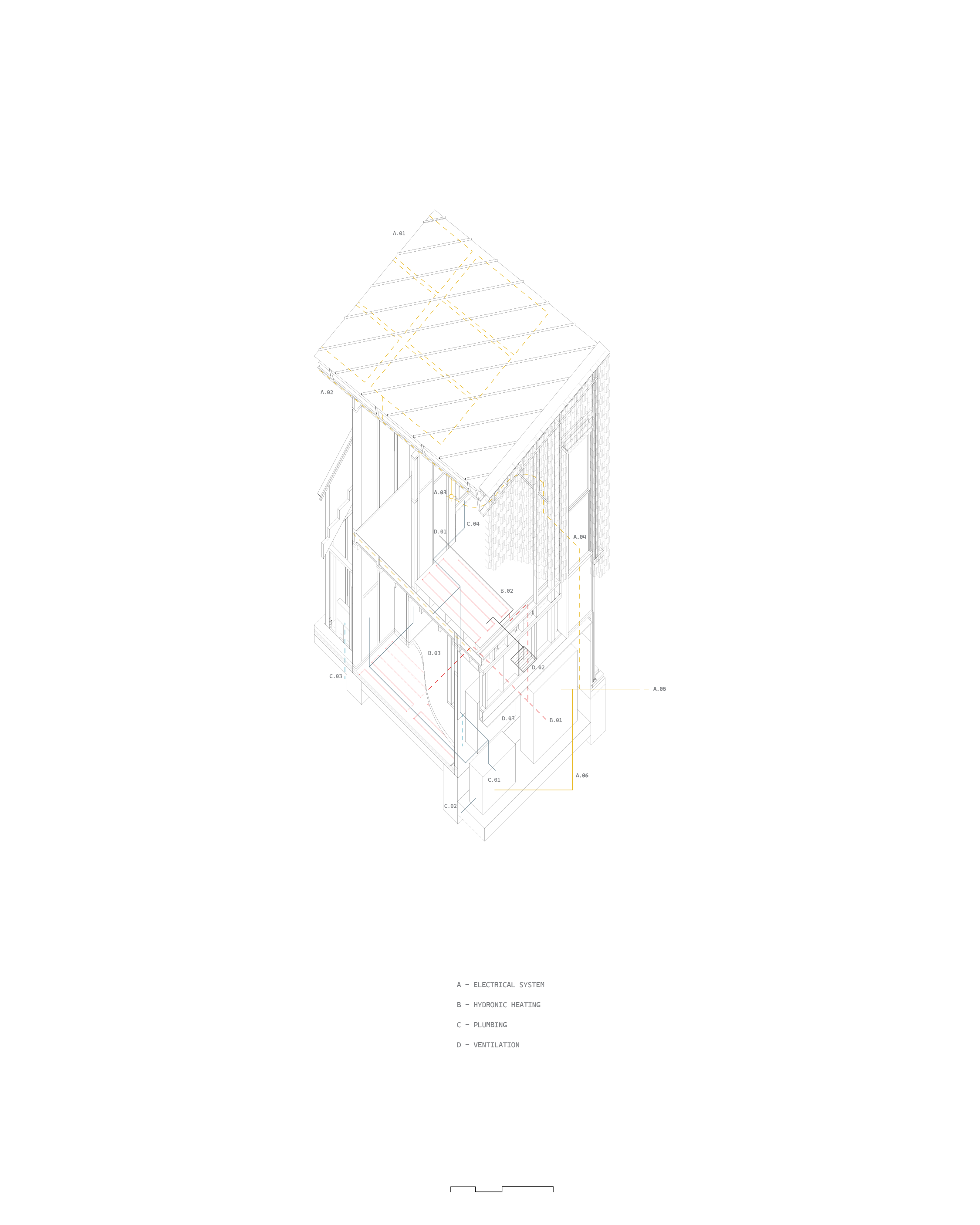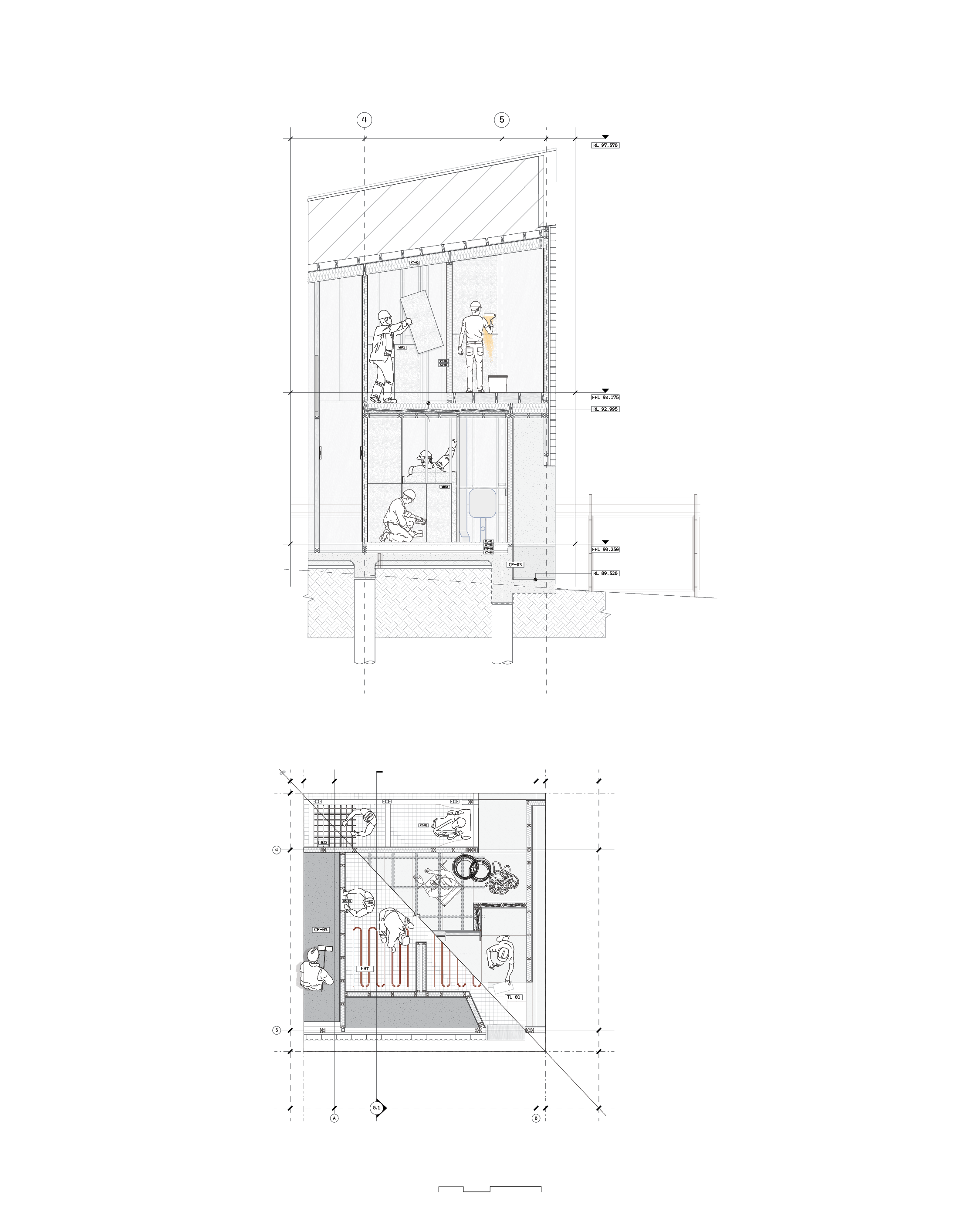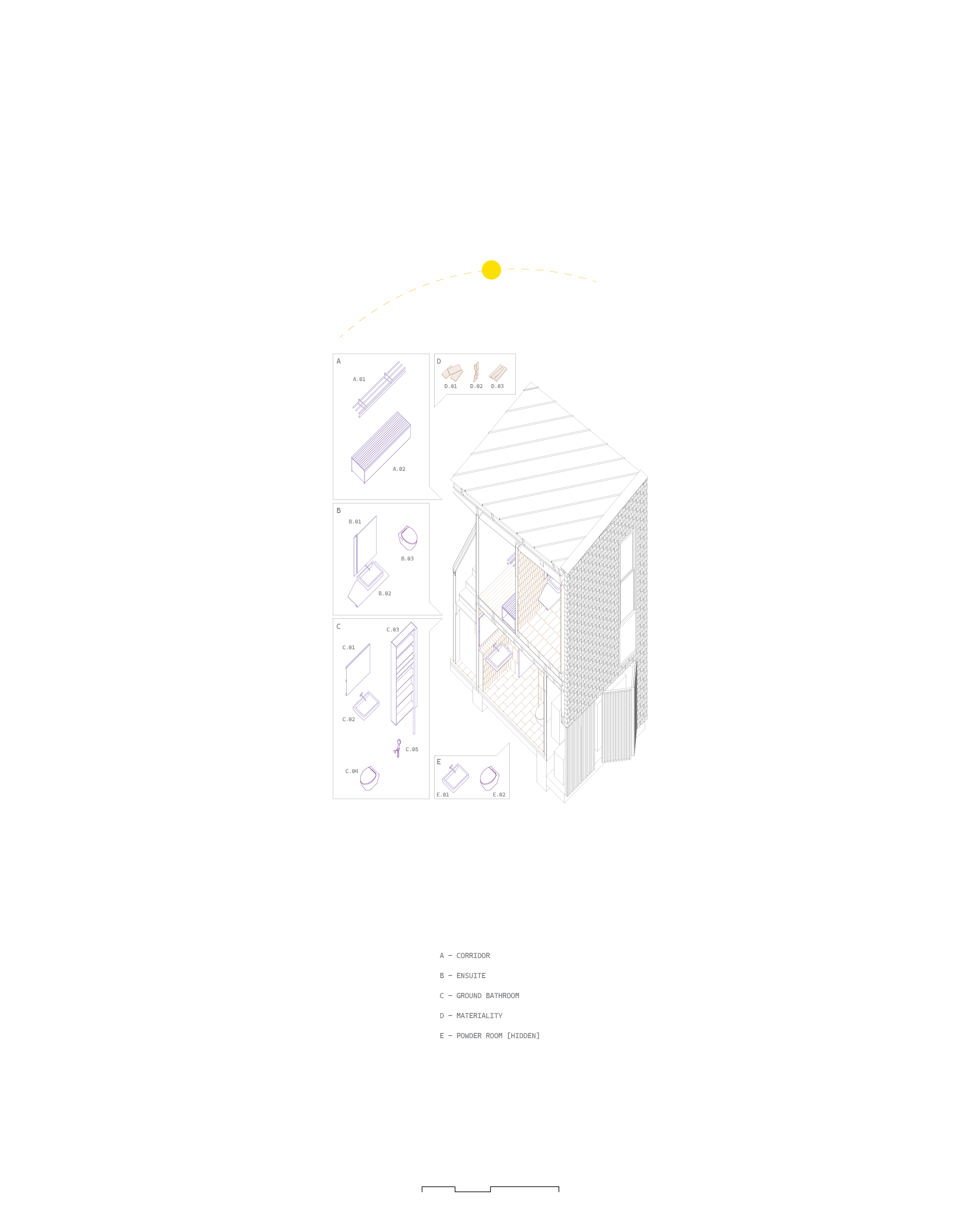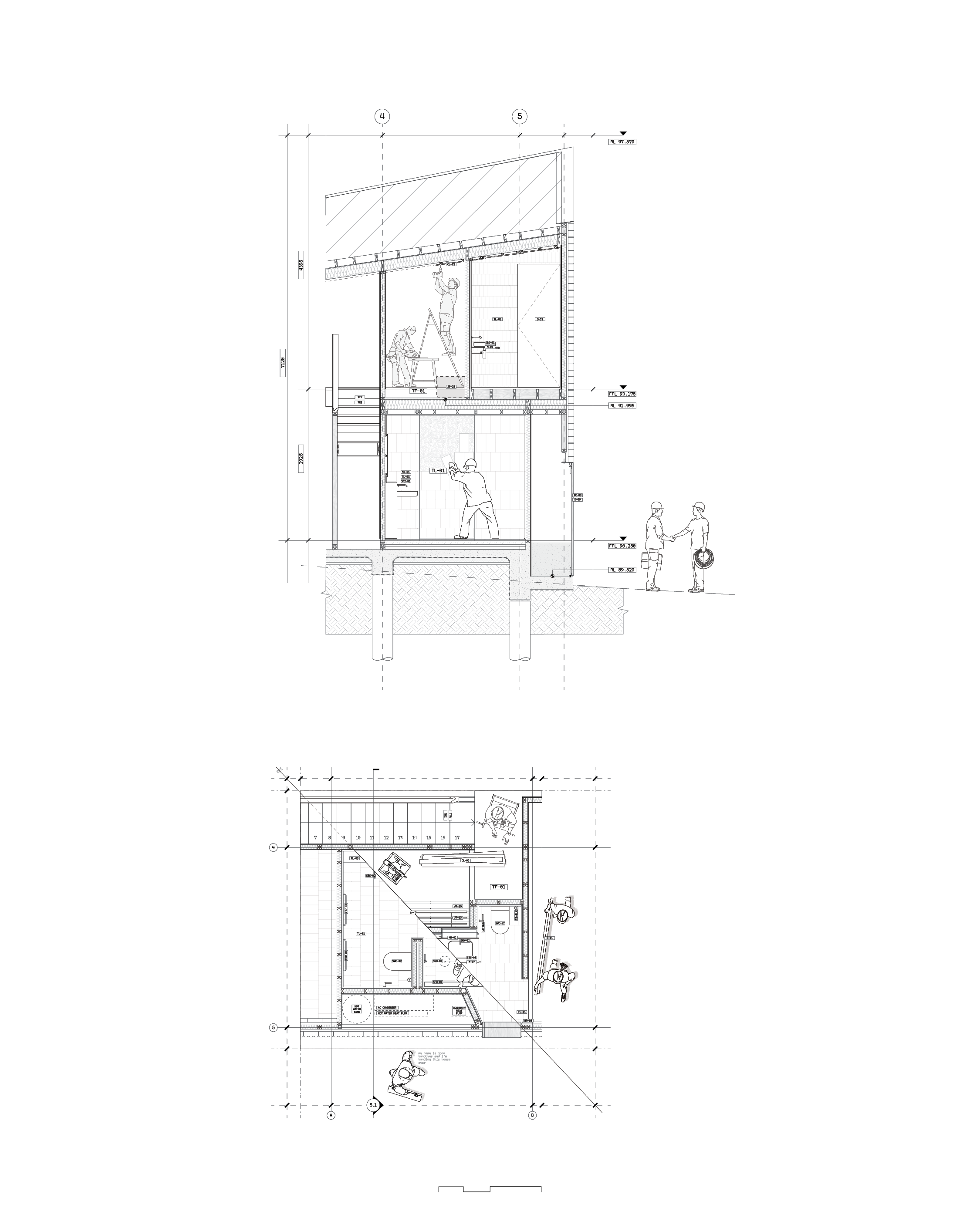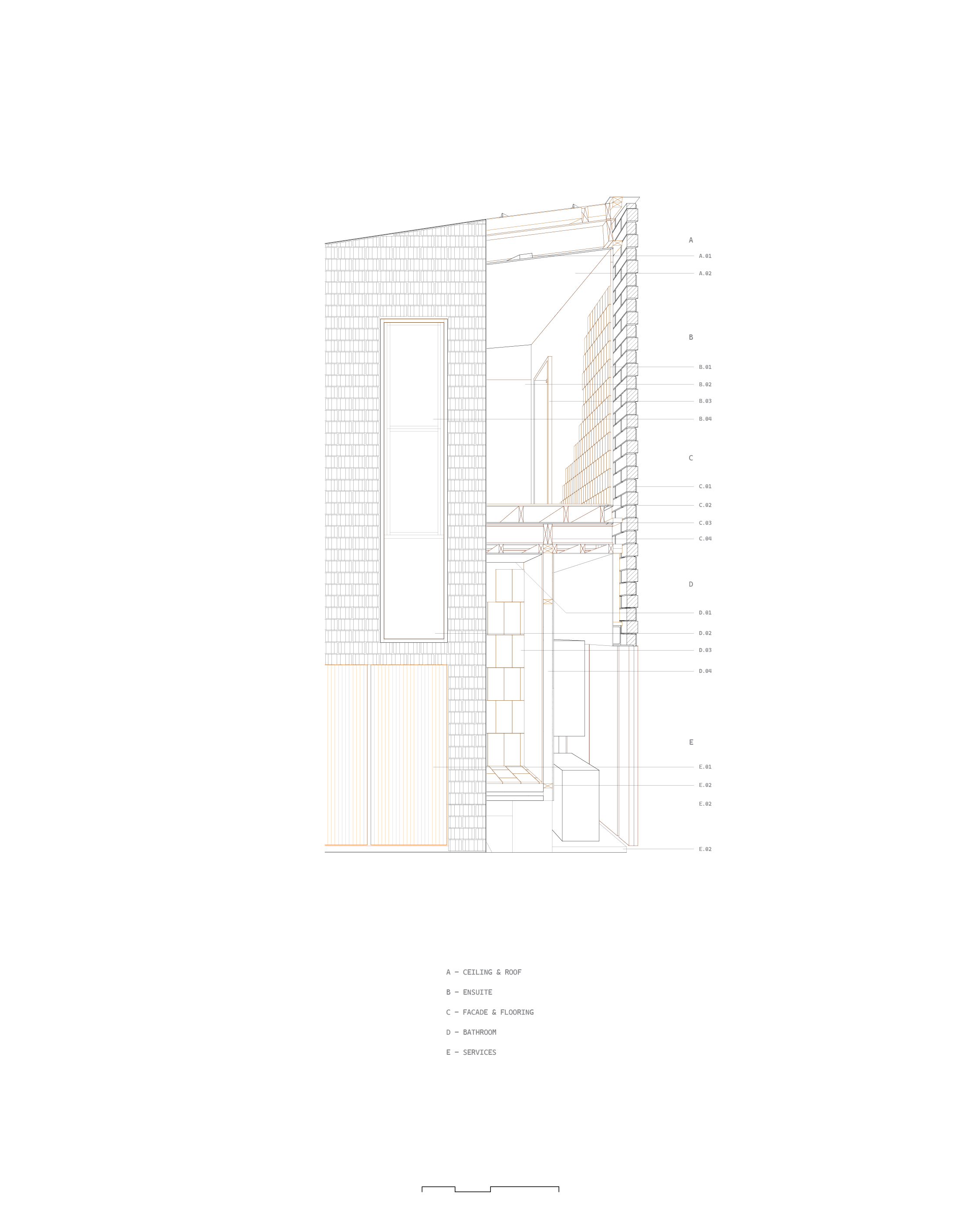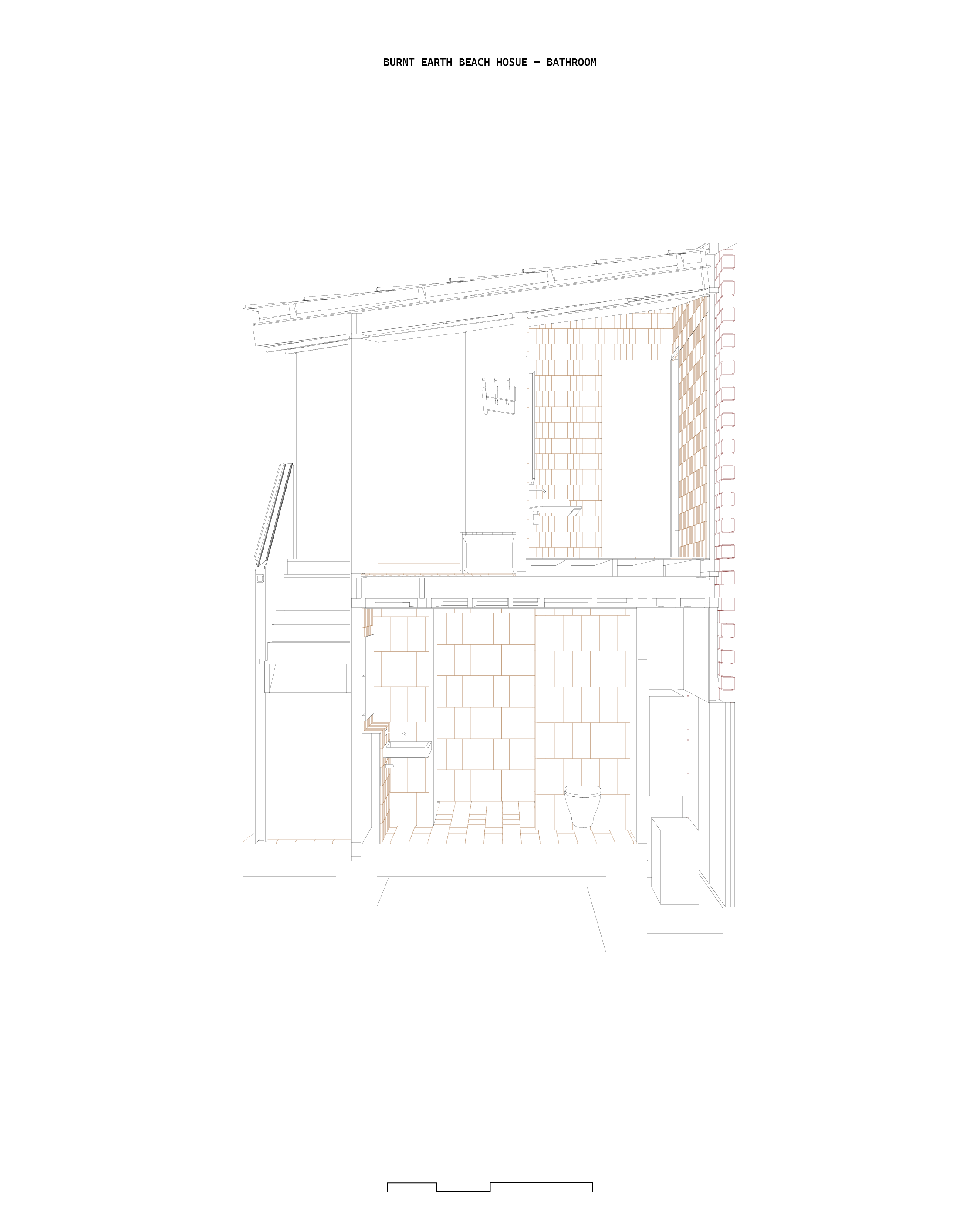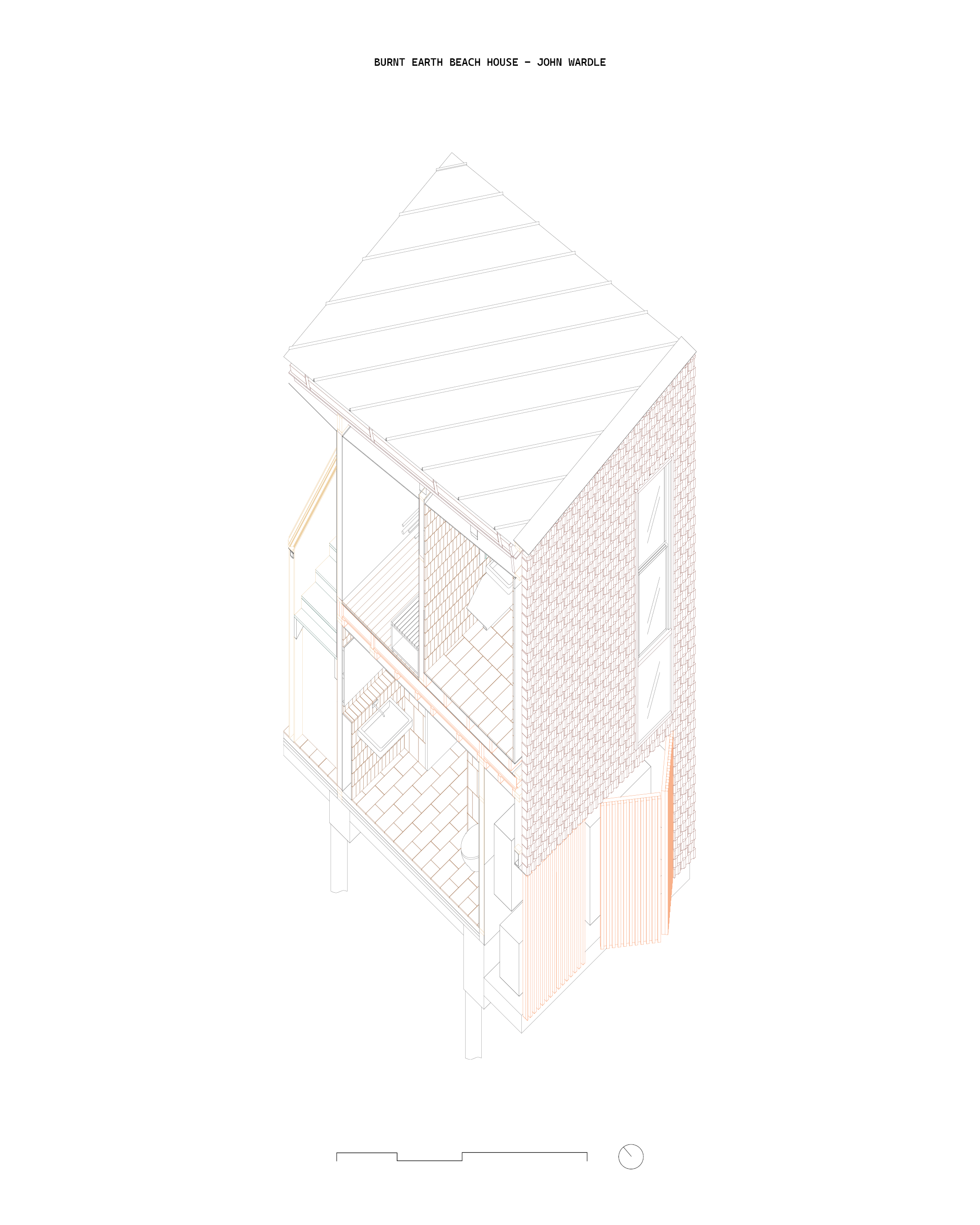
Architectural technologies becomes the starting point for student to interact with elements of construction and real-life applications of architecture, coming first into contact with examining physical construction stages and the translation of architectural design concept into built form. The case study house chosen for this example is the Burnt Earth Beach House by Wardle architects - a multi generational holiday home located at Anglesea in Victoria; the award-winning design and construction allows students to see the intersection between considerations of conceptual design previously exposed in prior studios now with elements of environmental sustainability, documentation and physical construction. Throughout the semester, students are tasked with reading the available information on these aforementioned elements and reconstruct and refer to the materials and building stages. First in 2D, then in 3D.
The building stages are divided into 6 portions: 1. foundation, 2. framing, 3. roofing, 4. exterior, 5. interior fit-out, 6. interior finishing; each examined for the different approaches in construction, materials and handling that are required. The recreation of the building stages were imagined using documentation provided by the architects and photos of the construction site which showcased the entire process of building the structure. Other documents including geotechnical report and press information about the house further showed the evolution of the architectural process of materialising concept designs and considerations towards the living of people in a house - such as insulation for thermal stability and acoustic separation, interior temperature controls, daylight access, etc.