We begin with the first principle of this institution. The word
archive arrives in the English language from Latin and French,
but its true origin is in the Ancient Greek ărkhḗ, meaning both
“the beginning” and “dominion.”
This is the lineage, the history of the archive. Its origin is
the origin of all history, but its origin is also the beginning of
authority. What then can be said of its embodiment: the library?
The library has long served as the symbolic representation of
a civic body of knowledge. Beginning firstly as a container of
physical records, it has continuously grown and evolved with
ever-changing public conceptions of knowledge. This proposal
seeks to engage with this evolutionary path and the power
relations that are reproduced by its architectural symbolism
through the framework of Oliver Marchart’s “Die Institution
Spricht” (2005). It should reveal the institution’s authority as one
of dominion, and in turn, present a solution for countering such
hegemony.
The objectivity the library claims to embody must be
denaturalized, for there is no singular ‘ideal’ library. Knowledge,
rendered static through its classification systems, must be
revealed to be always contingent and conditional. The library
lends the topological to the nomological of the ‘canon,’ the old
crown jewel of the Western world. In sheltering these documents,
it wields its institutional capital to freeze what is archived in
stasis and condemn what is not to oblivion. It should be no
surprise, then, that libraries have a strong preference towards
classicalism. They build themselves on the Vitruvian principles;
they organize their reading spaces in the style of the panopticon.
These design motifs legitimize and give form to the privileged
materials of the canon.
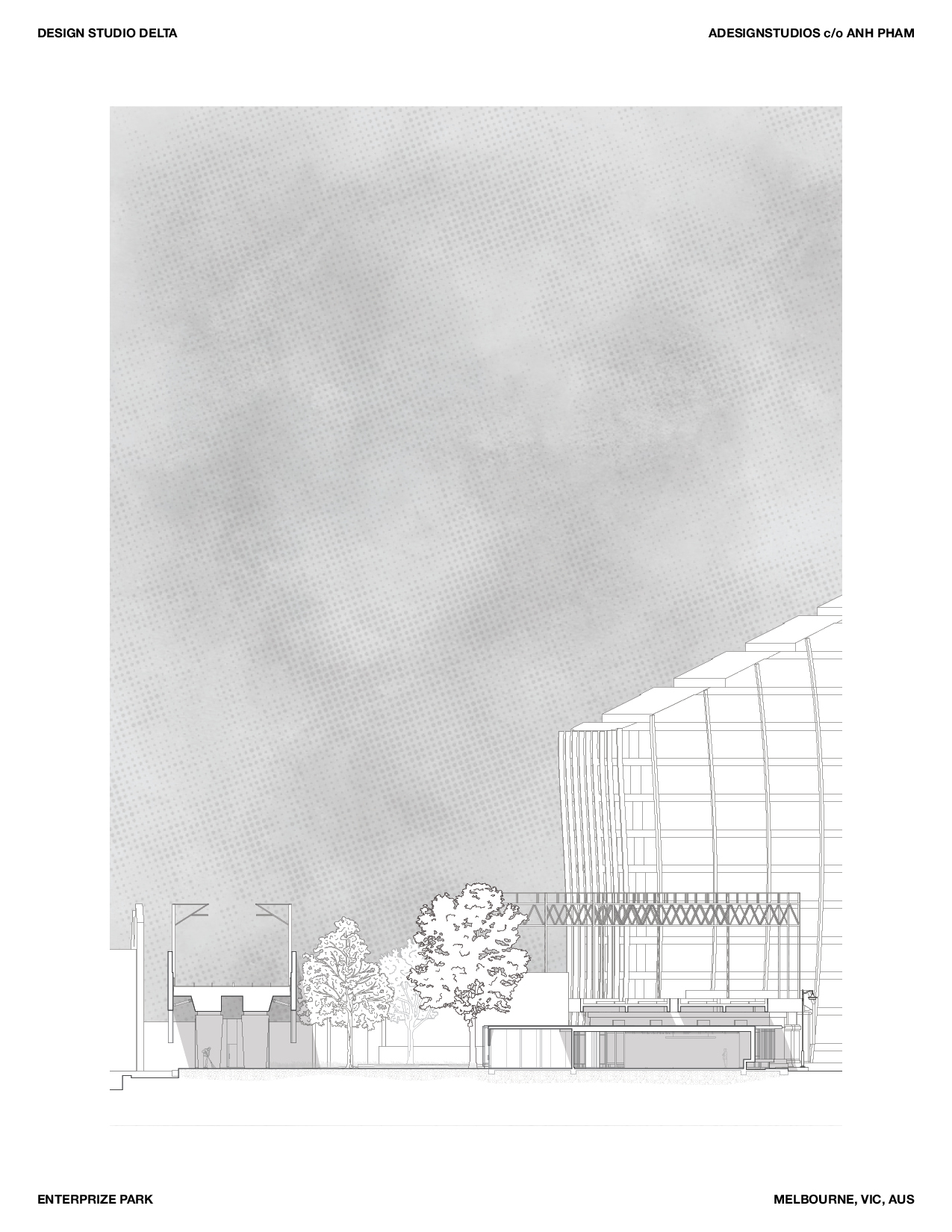
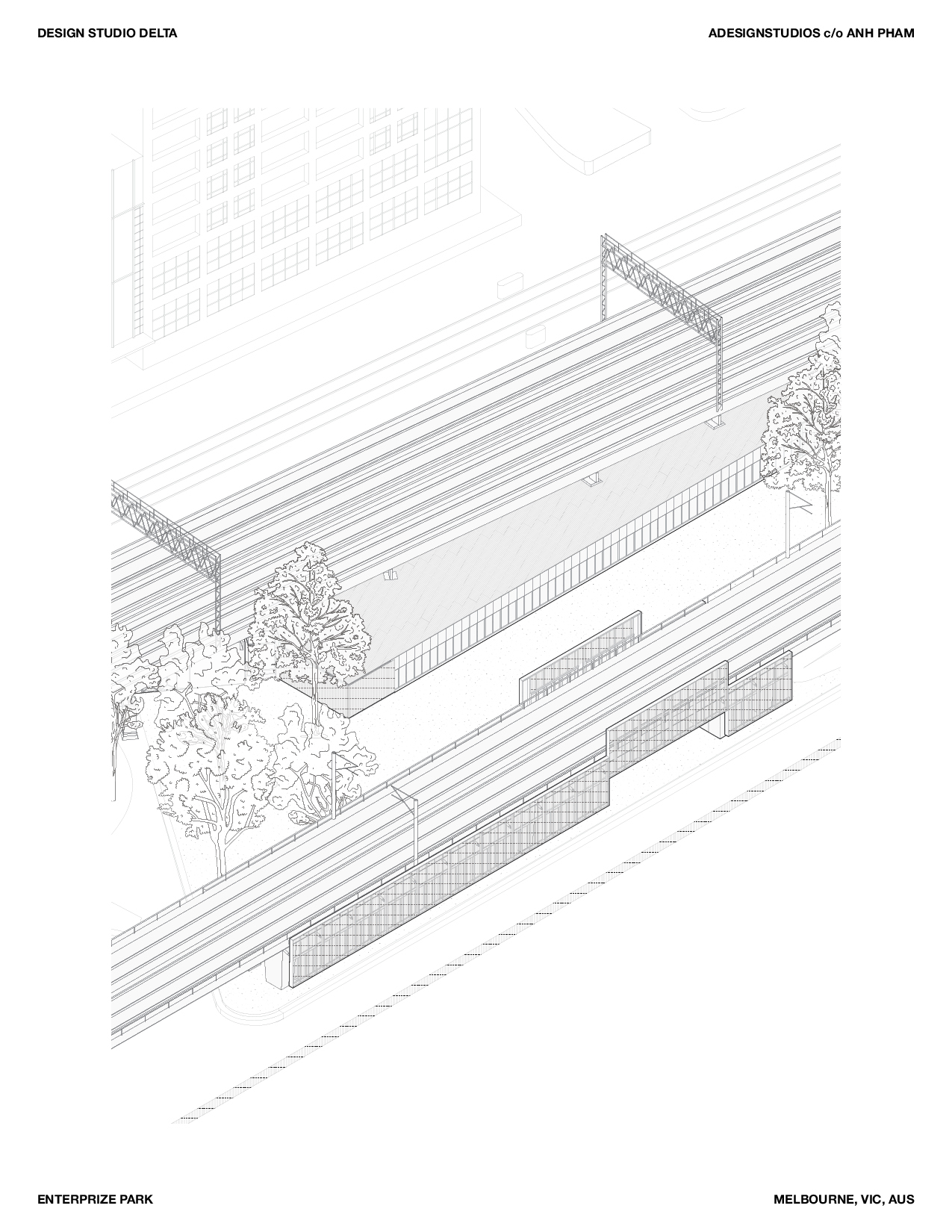
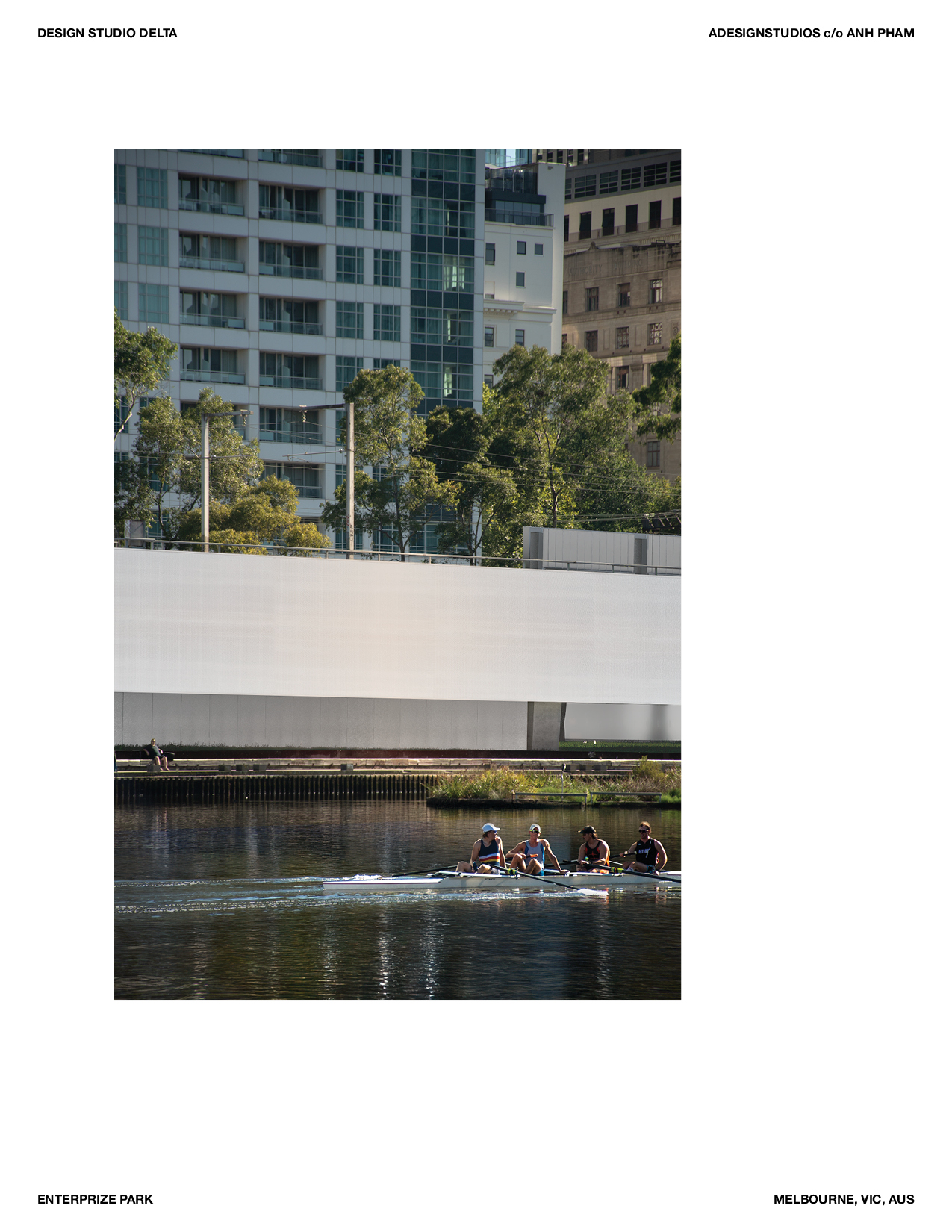
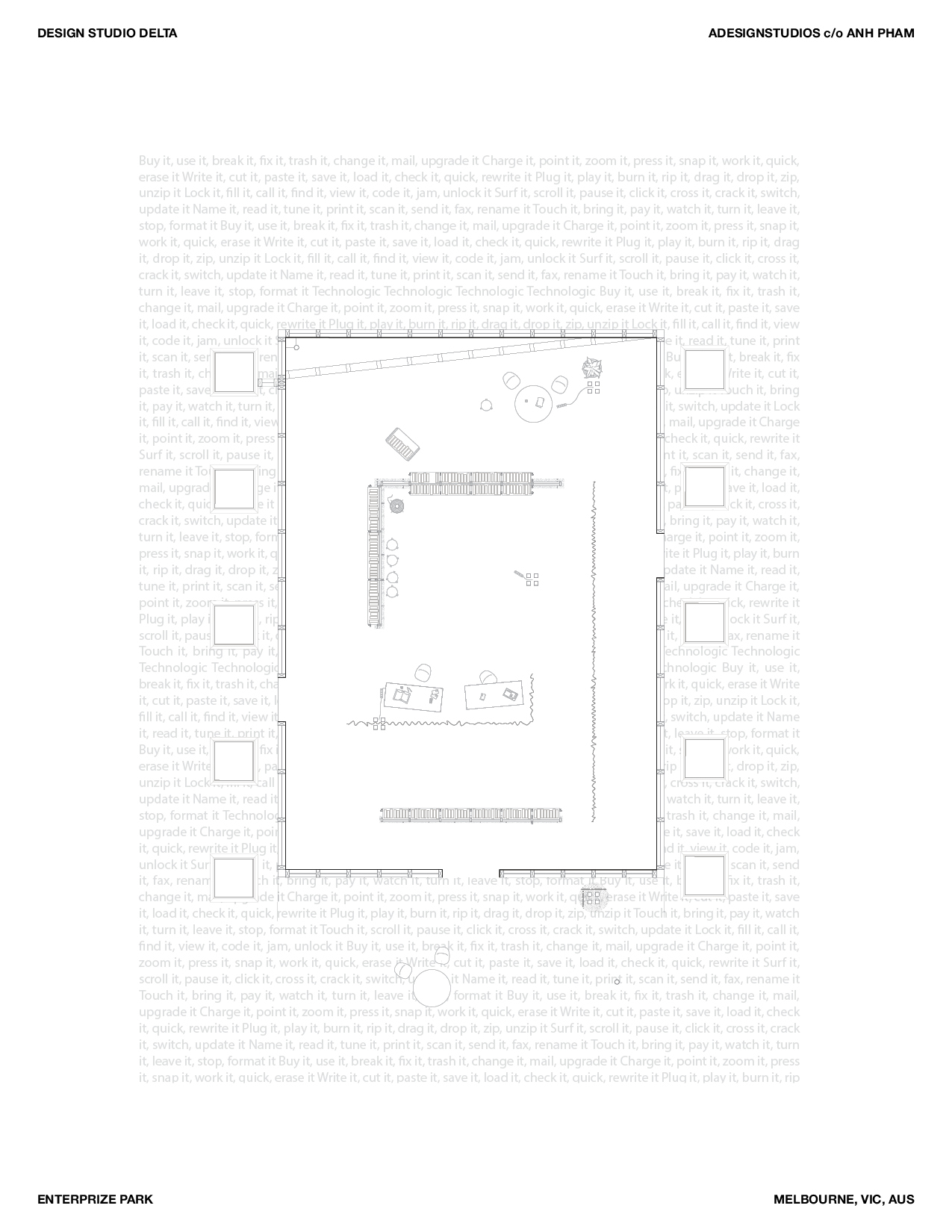
The proposed library responds directly to these themes. Whereas
traditional libraries establish presence through idiomatic
ornamentation adjusted to a vertically monolithic scale, this
library presents monolithicism through a horizontal dimension
and reinterprets access as transformations of the geometry as
opposed to manipulative navigation of the occupant through its
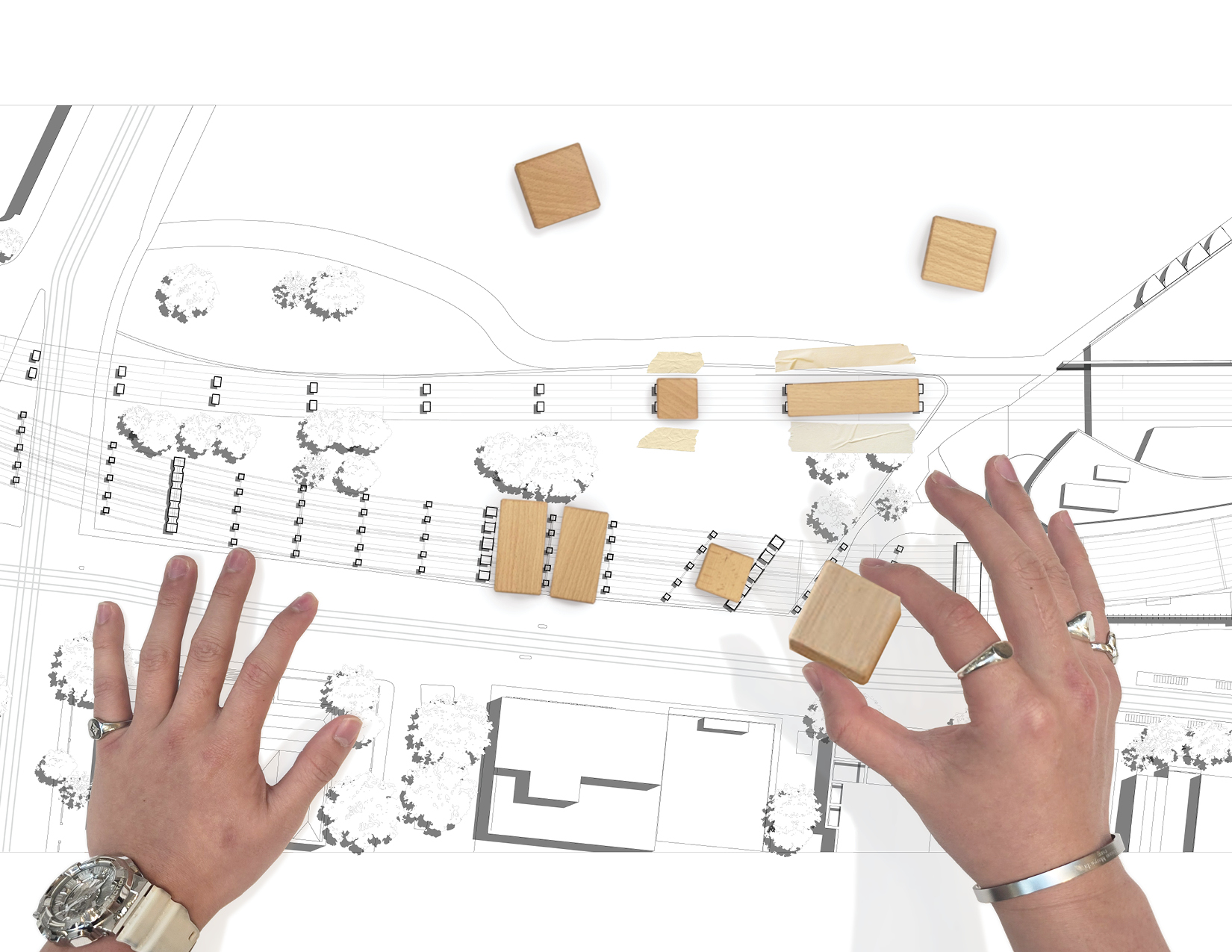
elements. An architectural layout of surveillance is replaced by
one informed by the site’s existing conditions and other factors.
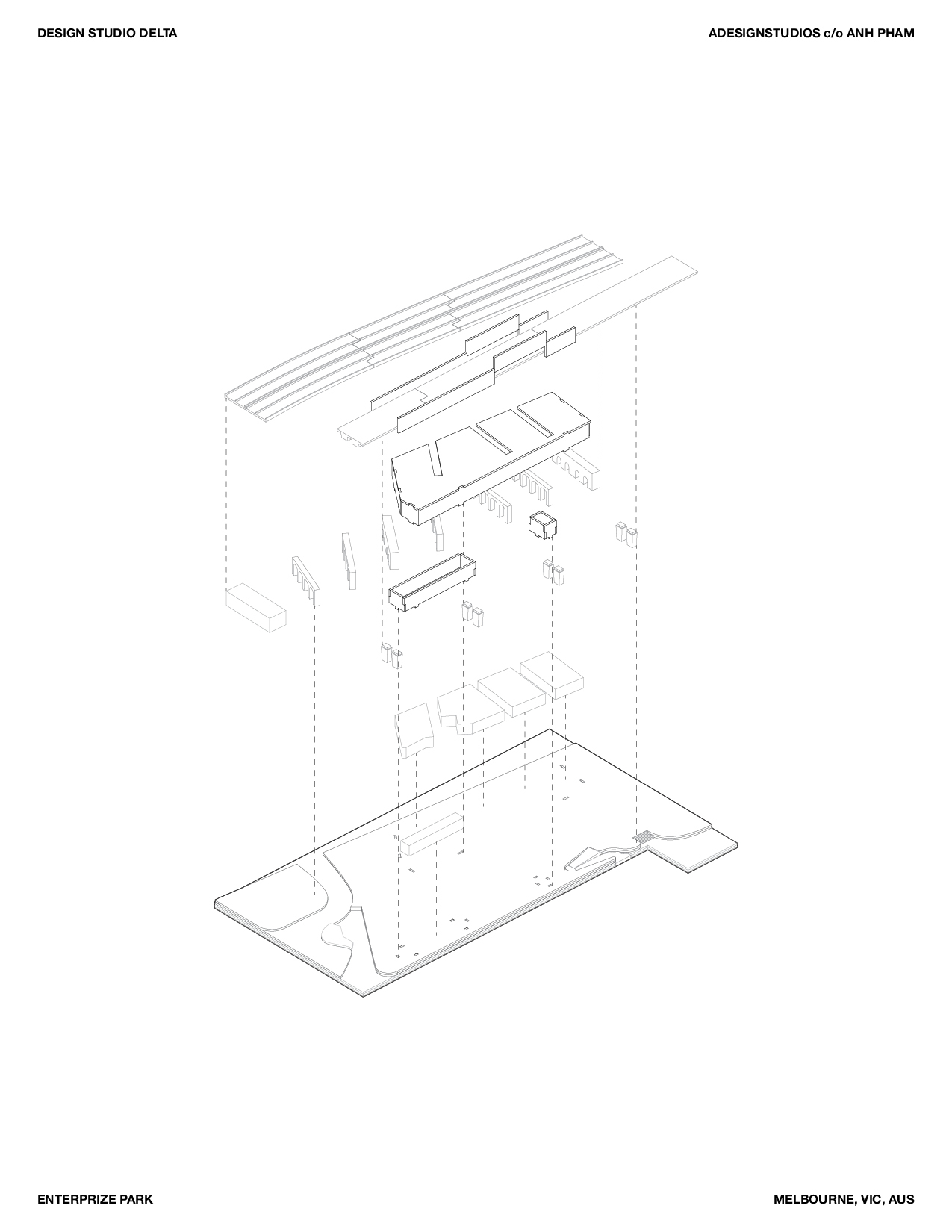
The total of multiple elements, it creates a protective spatial
experience through a layering of thresholds. Its multiplicity of
elements reflects the multiplicity of the library’s conditions—its
interior space uses screens, curtains, and columns to produce
a protective spatial experience, pushing back against typical
panopticon layouts designed for surveillance.