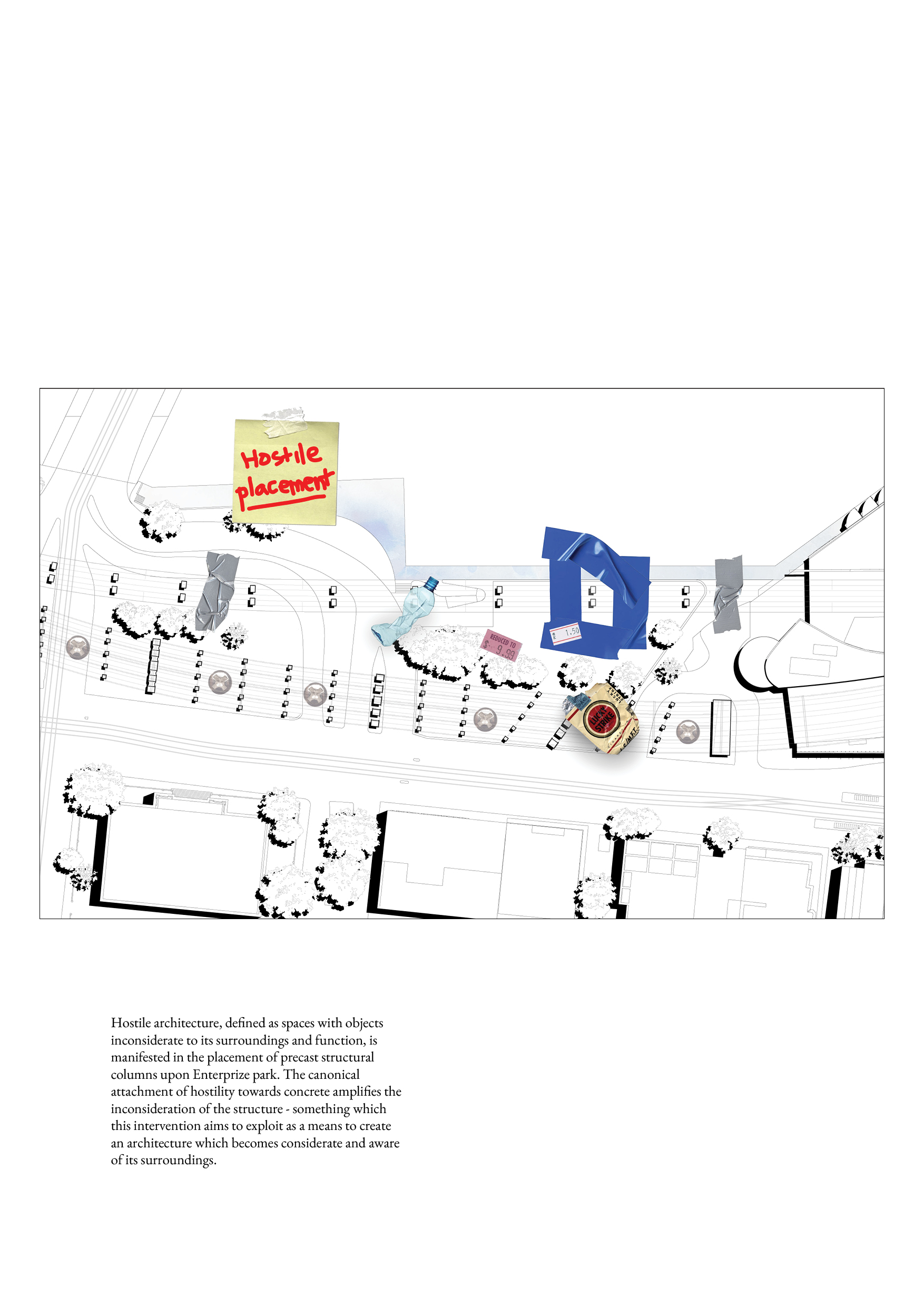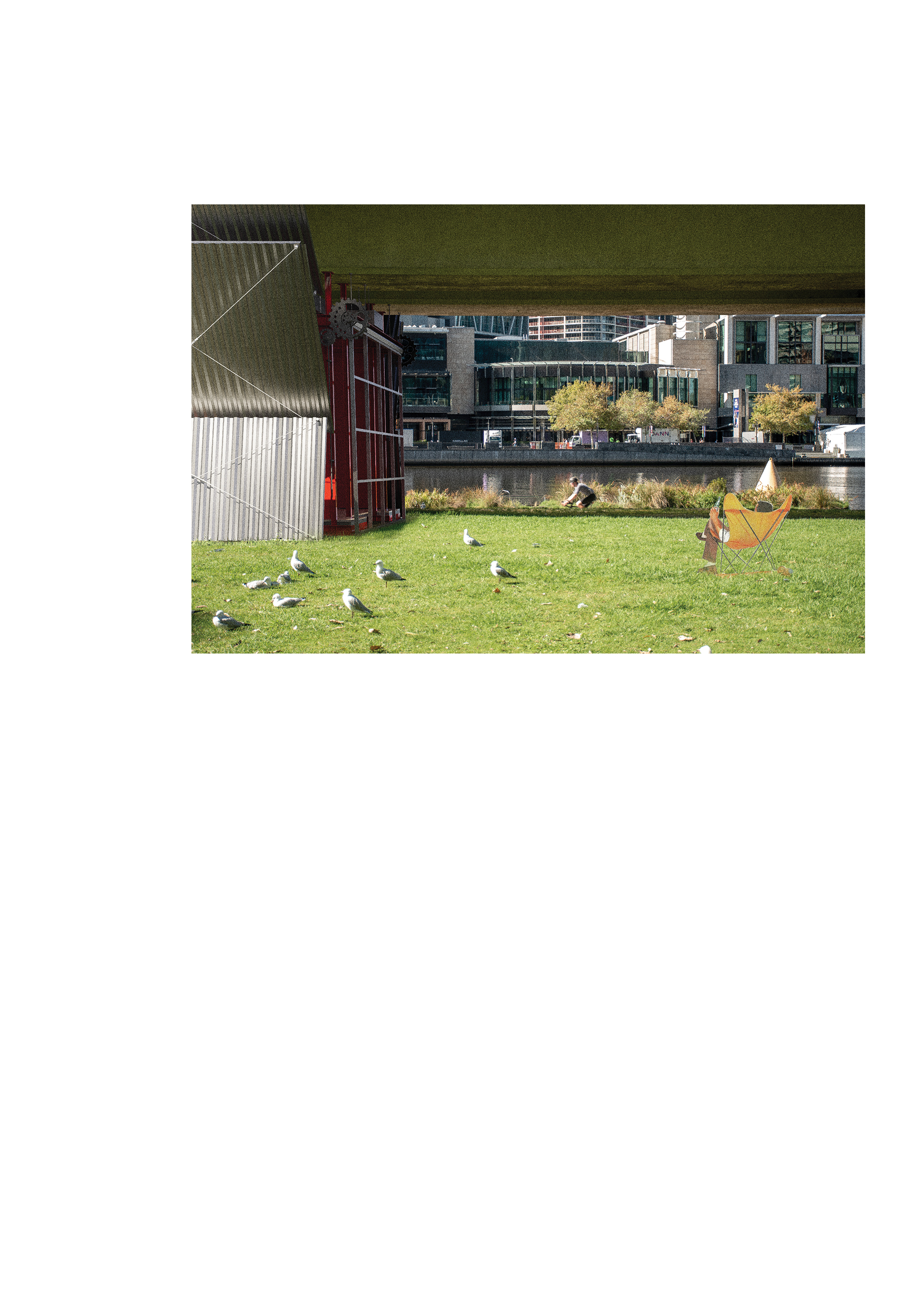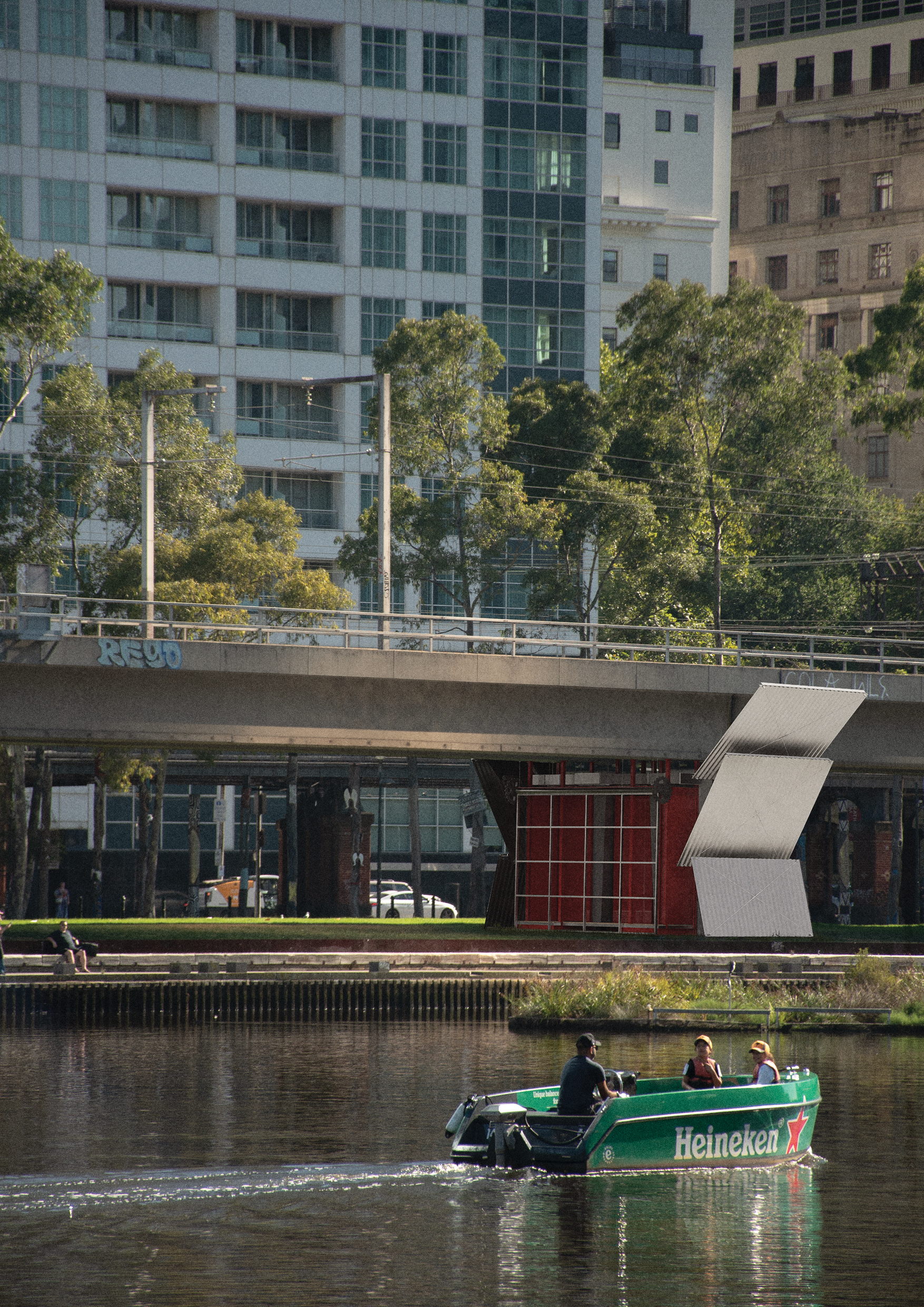
Within this proposal the question revolves around the idea of a civic structure, the perspective on service and ideas of hostile architecture. Located on and beside Enterprize Park lie two bridges, where I depicted one as being both of service and built with consideration to its surroundings, and the other without. The precast concrete train tracks feel simply “placed” on the park greenery itself and lends no effort to be considerate towards its surroundings. This I classify as being “hostile”. A structure in which there is no consideration for its surroundings; its hostility caused by lack of placement conflicts directly with its civic service, providing transport to people. However, its service is only limited to the temporal functions when the service is needed – when the train crosses does it become “civic”. My proposal aims to adapt the structure and transform its passive identity towards one that aims to be considerate.
Another item tying the structure to hostility is the canonical ties between concrete and utilitarianism, amplifying its passive hostility. This cannot be denied and any attempts at mediation without acknowledgement of this fact only seem to amplify the original structure’s hostility. However, by using these canonical ideas and transforming them into something ironic and humorous, these perceptions of “utility” and “service” can be used as an indication of consideration towards people’s perceptions of the structure – by playing into their humor.
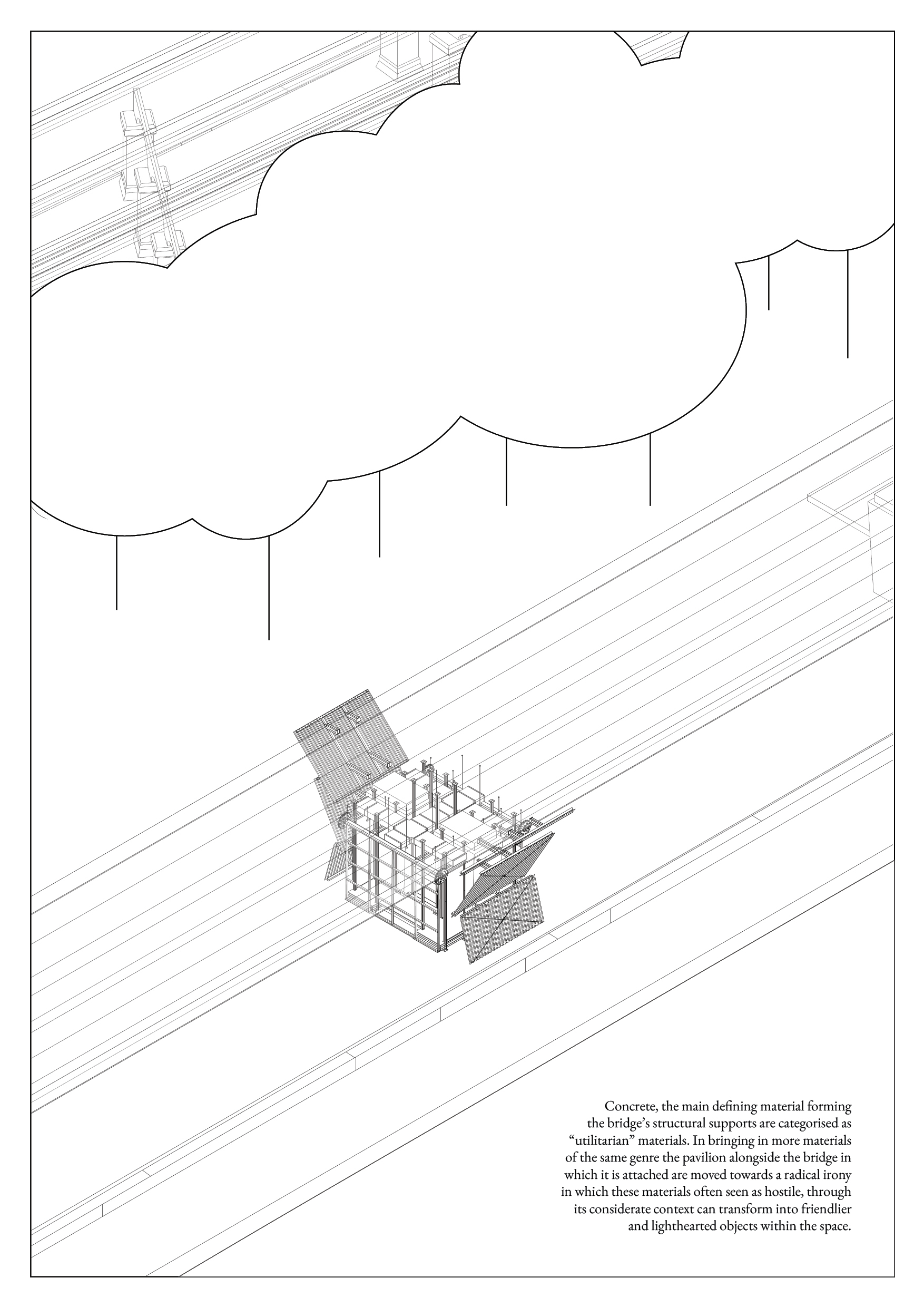
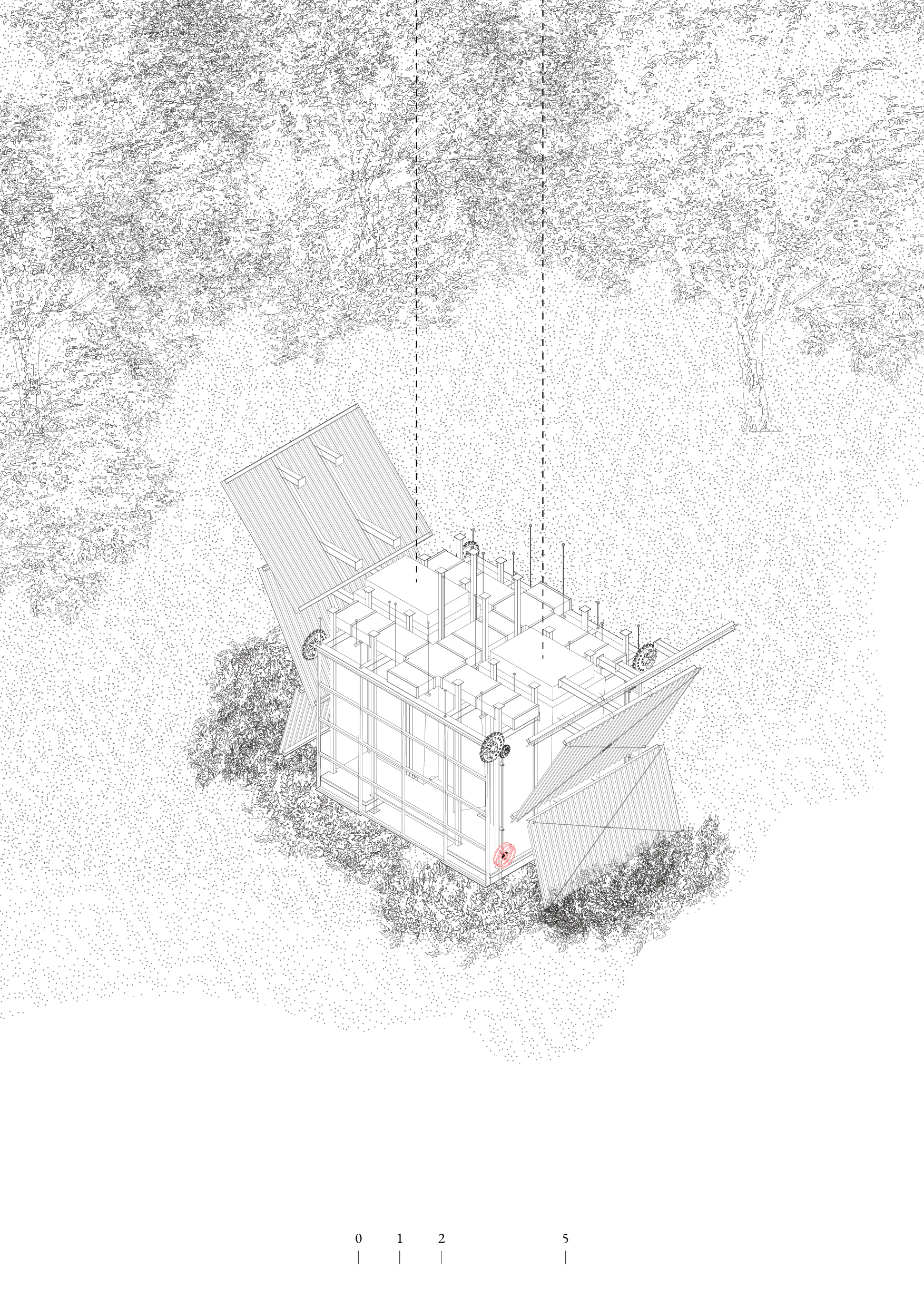
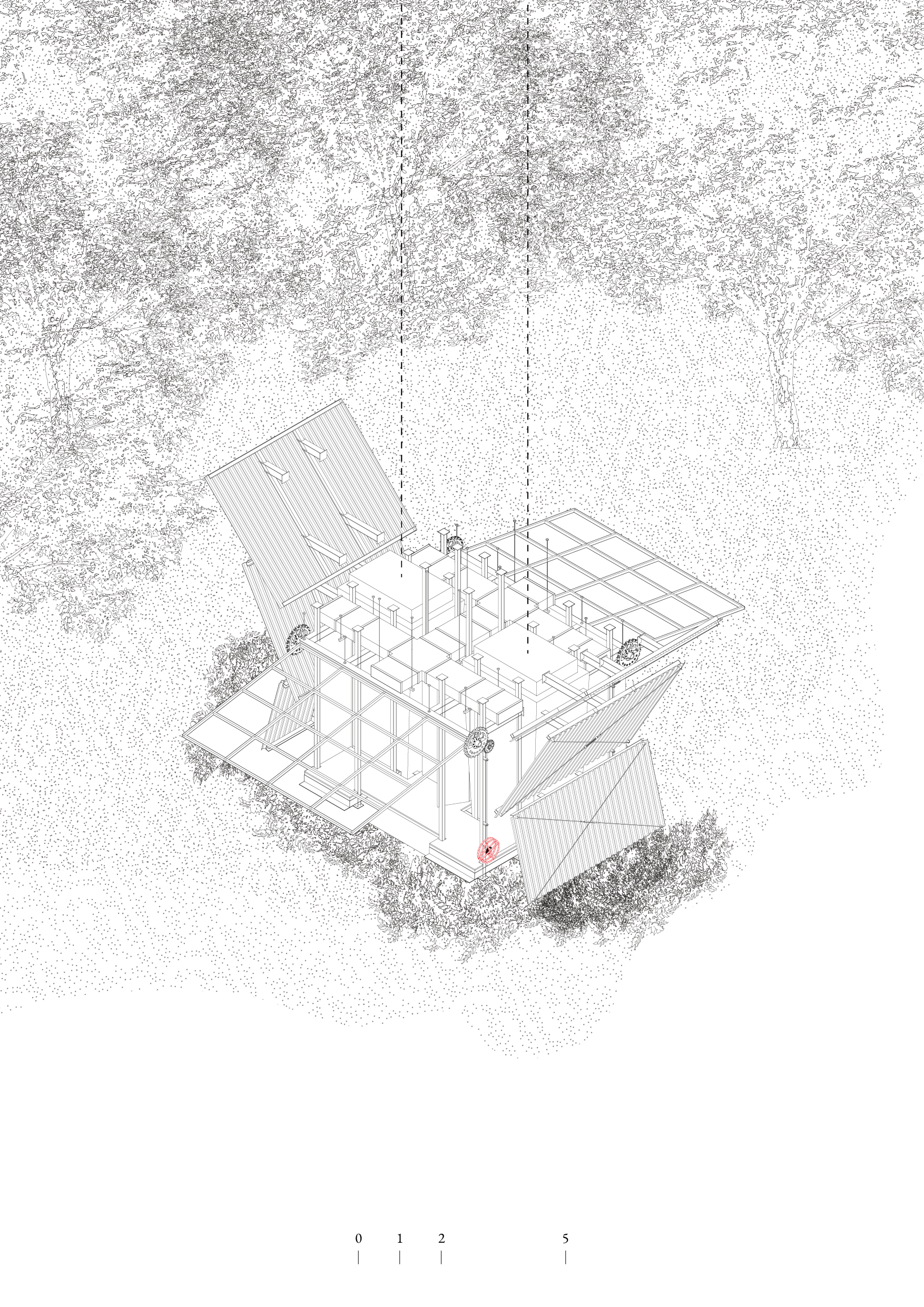
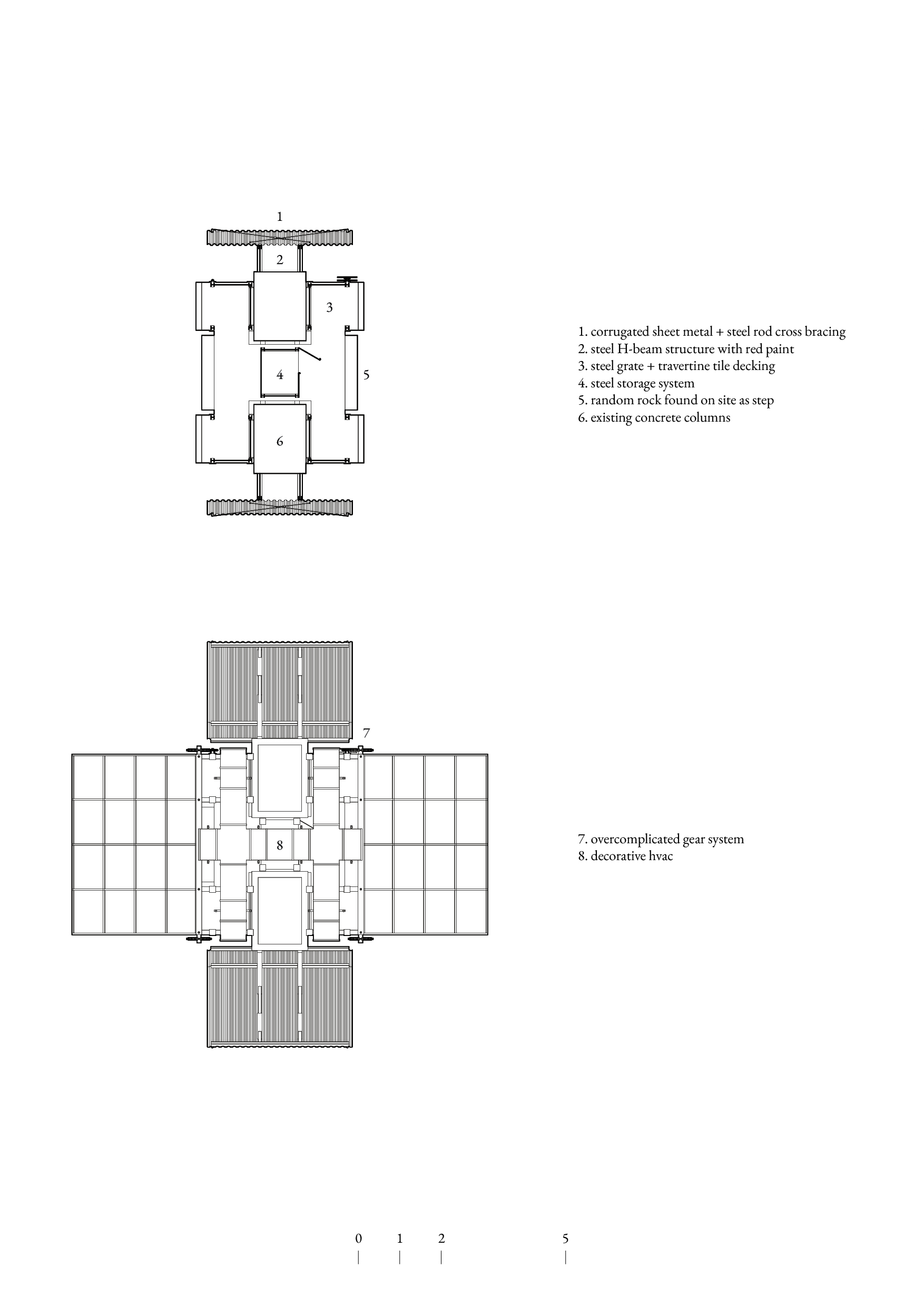
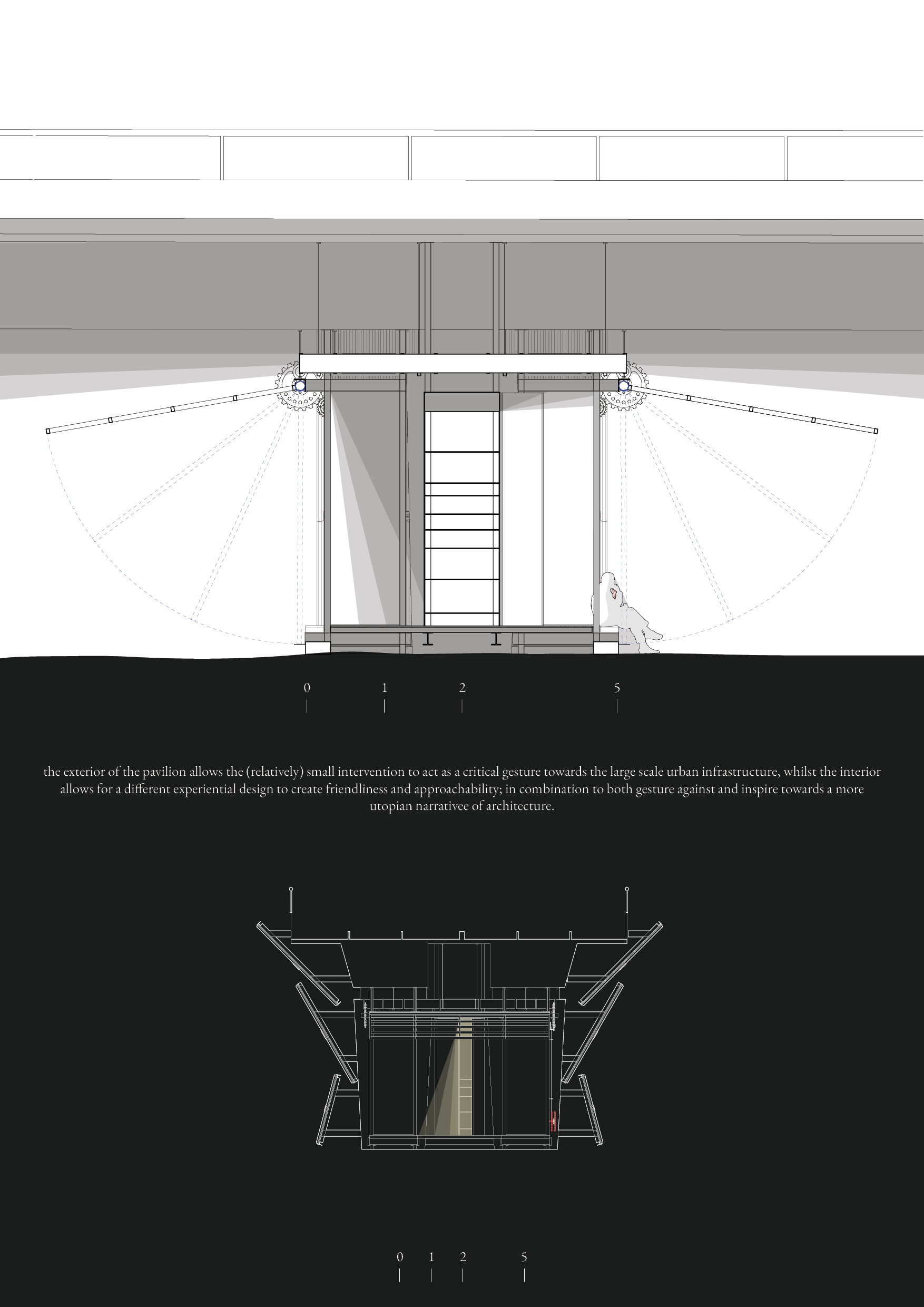
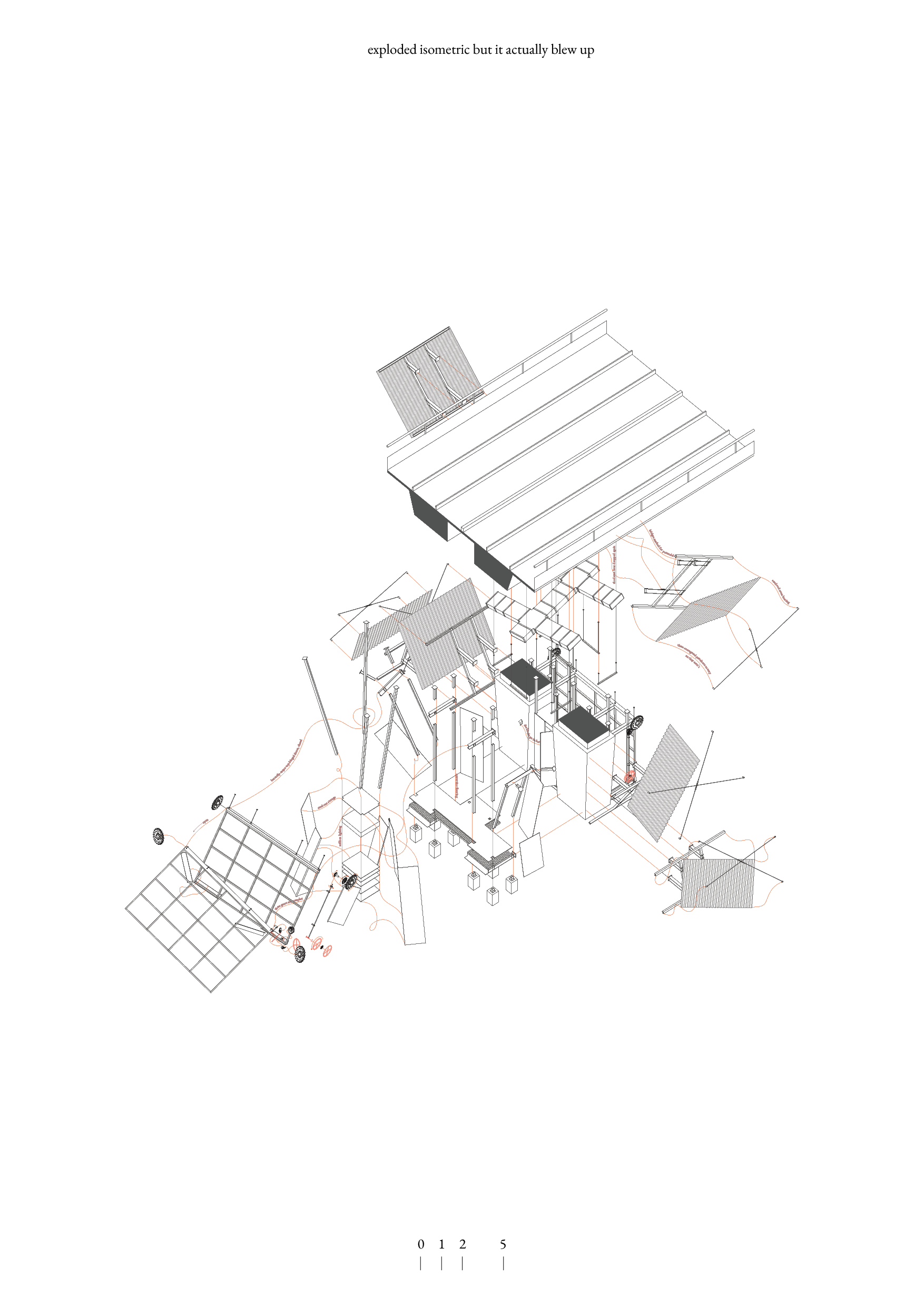
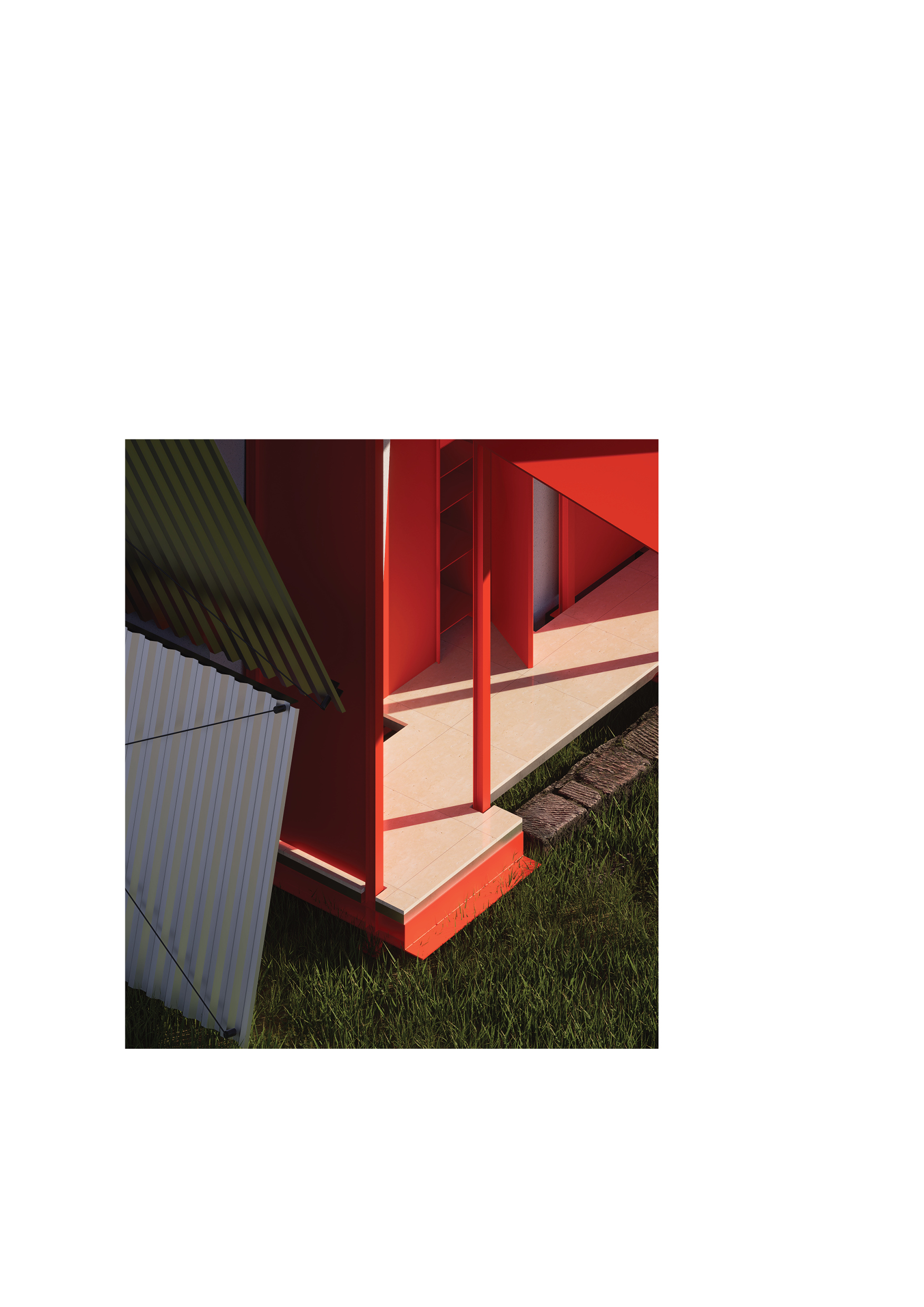
The structure I propose is crafted from multiple corrugated sheets of metal clad upon the concrete structure, supported by red steel which is bolted into the concrete itself. Although this reduces its ability for deconstruction, it allows future perceptions of people towards the structure not as purely hostile, but also as a canvas for friendliness from its scars (inspired by Carlo Scarpa’s interventions into historic architecture). The doors open up similar to a butterfly as a gesture, providing shelter and access to a space otherwise deemed as hostile and “unsafe”.