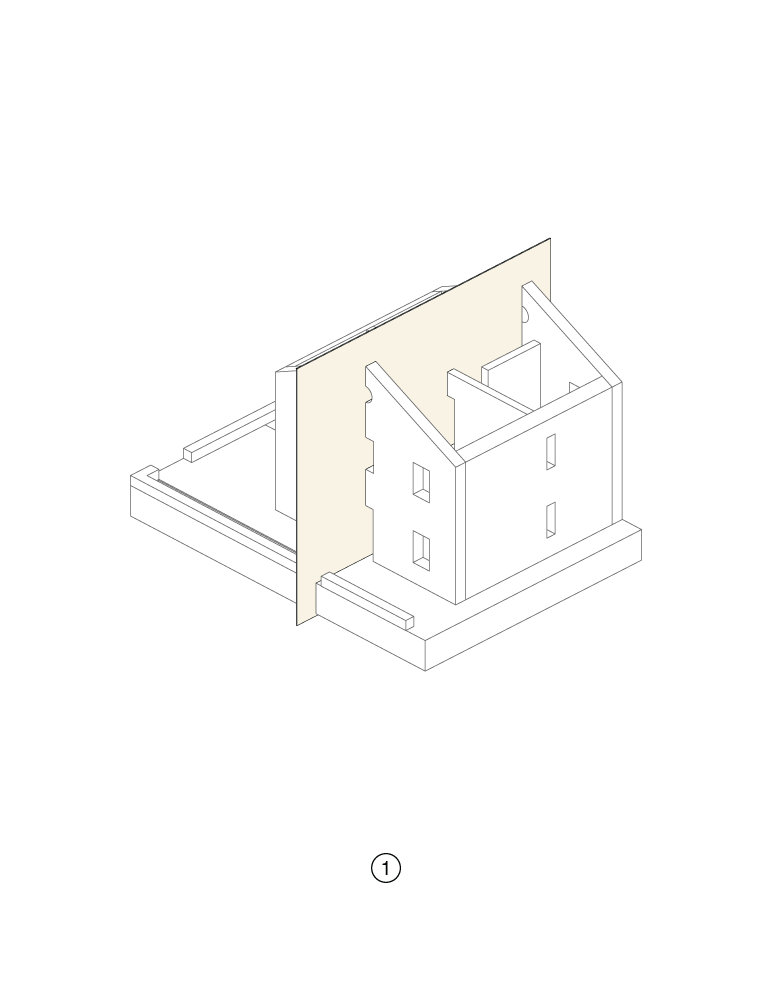
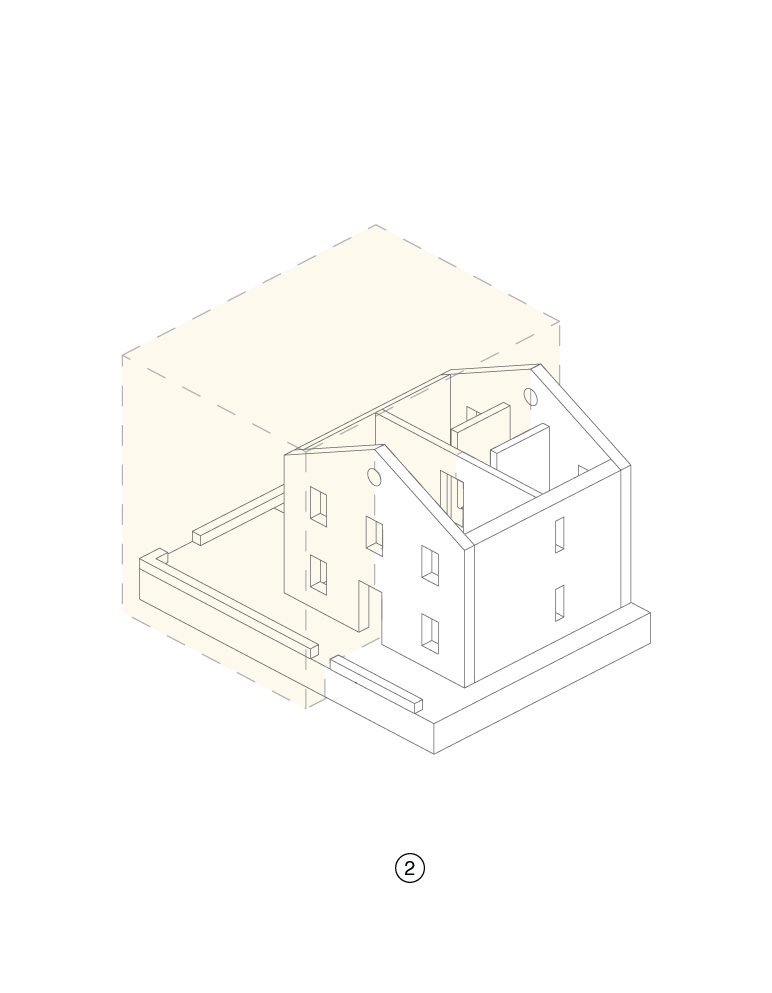
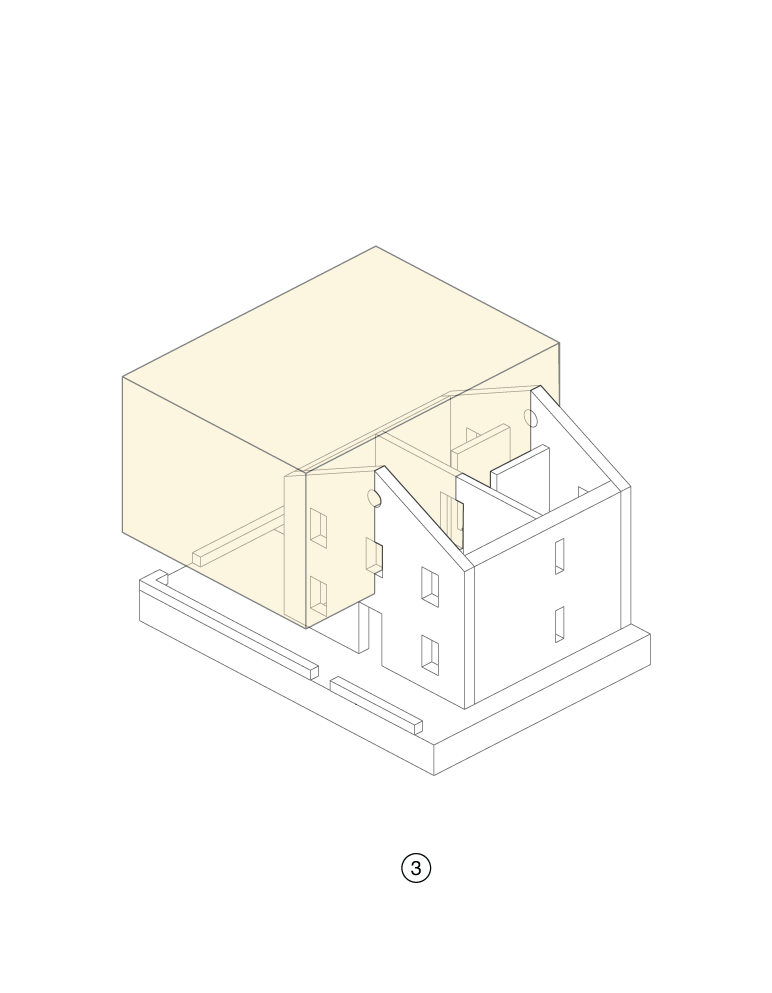
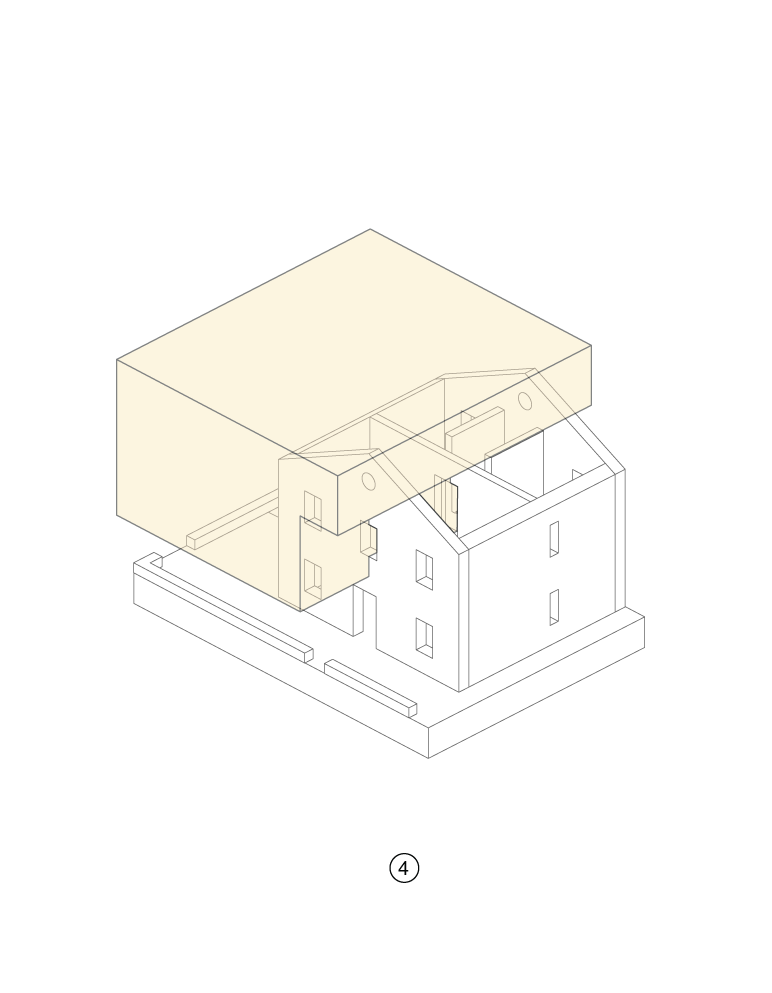
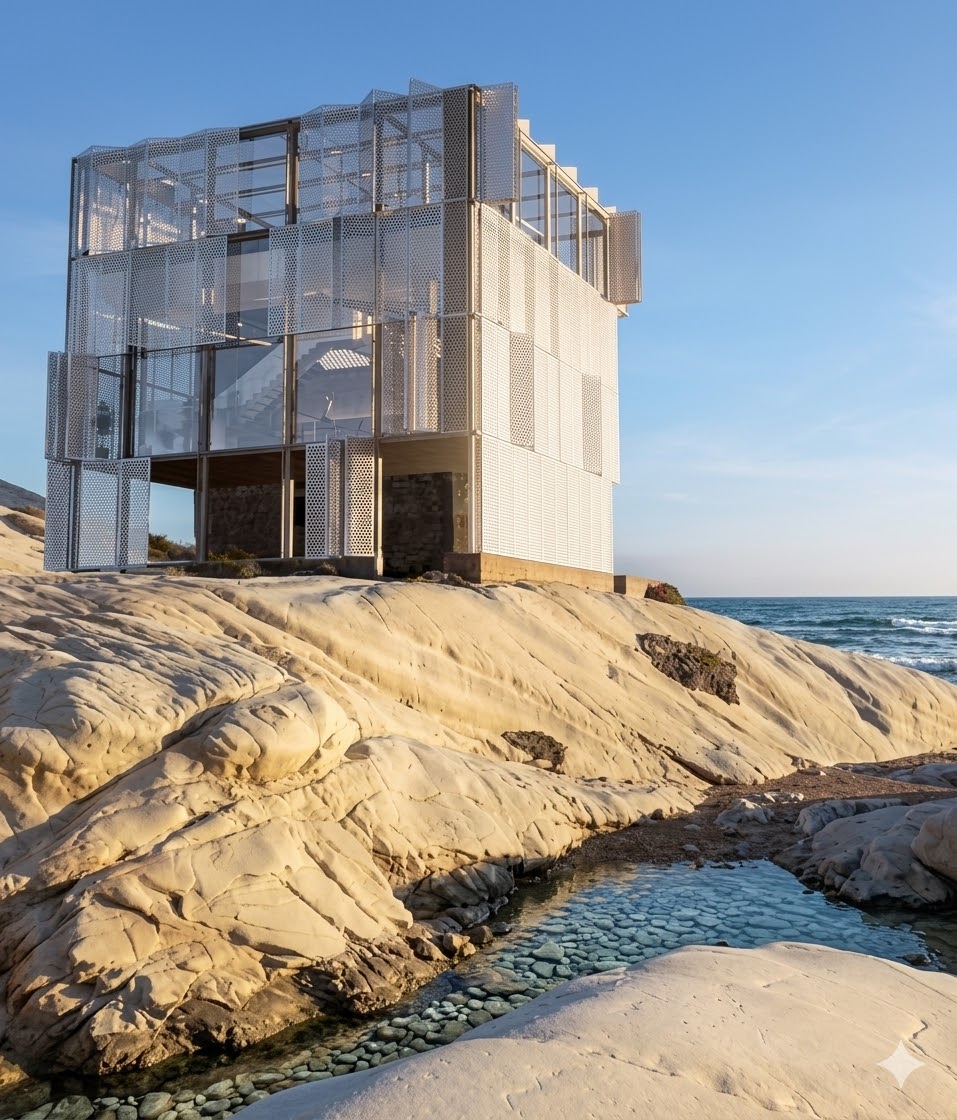
La Punta Bianca is part of a competition hosted to propose a new life for an abandoned coastguard house on the rocky beaches of Punta Bianca, Agrigento, Italy. The brief asks that the repurposed structure be used as a visitors' centre with gallery spaces, a cafe and other amenities to support the overarching function. In consideration of this brief there was a question that appeared before me: which method of conservation would most respect the original structure and could be representative of the future tourist culture in Italy. Would it be more appropriate to encase it in glass and forever cement its current state for the rest of time (which I appropriately call "the glass box approach"), or would it be more appropriate to gently intervene and allow the structure to be exposed to its intended surroundings as a method of continuing the dialouge between architecture and environment.
The challenge I personally took in approaching this design was how to appropriately handle both of these methods of adaptive reuse in a way that honoured both angles of approach without compromising either; it was then that I got inspired by a playful approach which was to simply "slice" the building in half, allocating each side of the building to be preserved in one of the respective ways. The side in which conservation was approached in allowing dialouge between the two elements were heavily focused on internalising the renovations, creating interior spaces inspired by the external historic brick wall and spaces that deeply reflected its history - galleries, reception, lounges. Whilst the 'glass box' approach attempted to externalise the design, focusing much more on the external facade using perforated metal panels to both reduce the effect of heat gain as well as communicate the presencce of the volumetric covering of the structure.